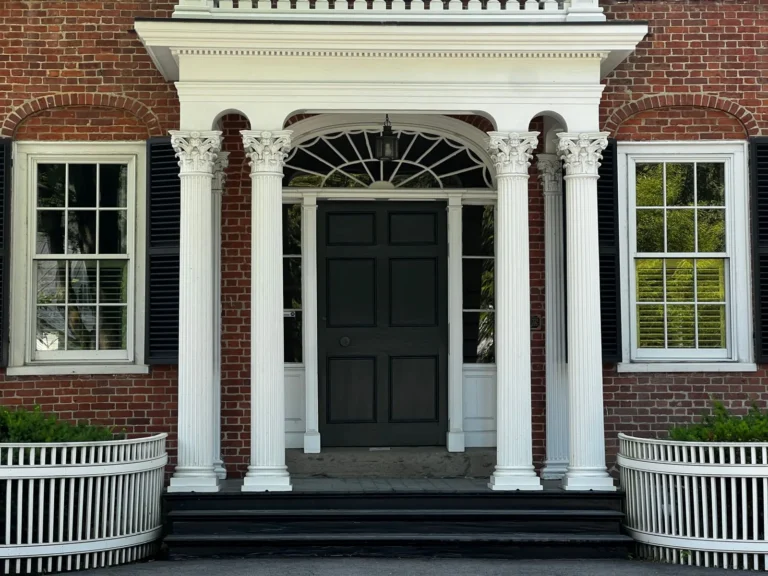
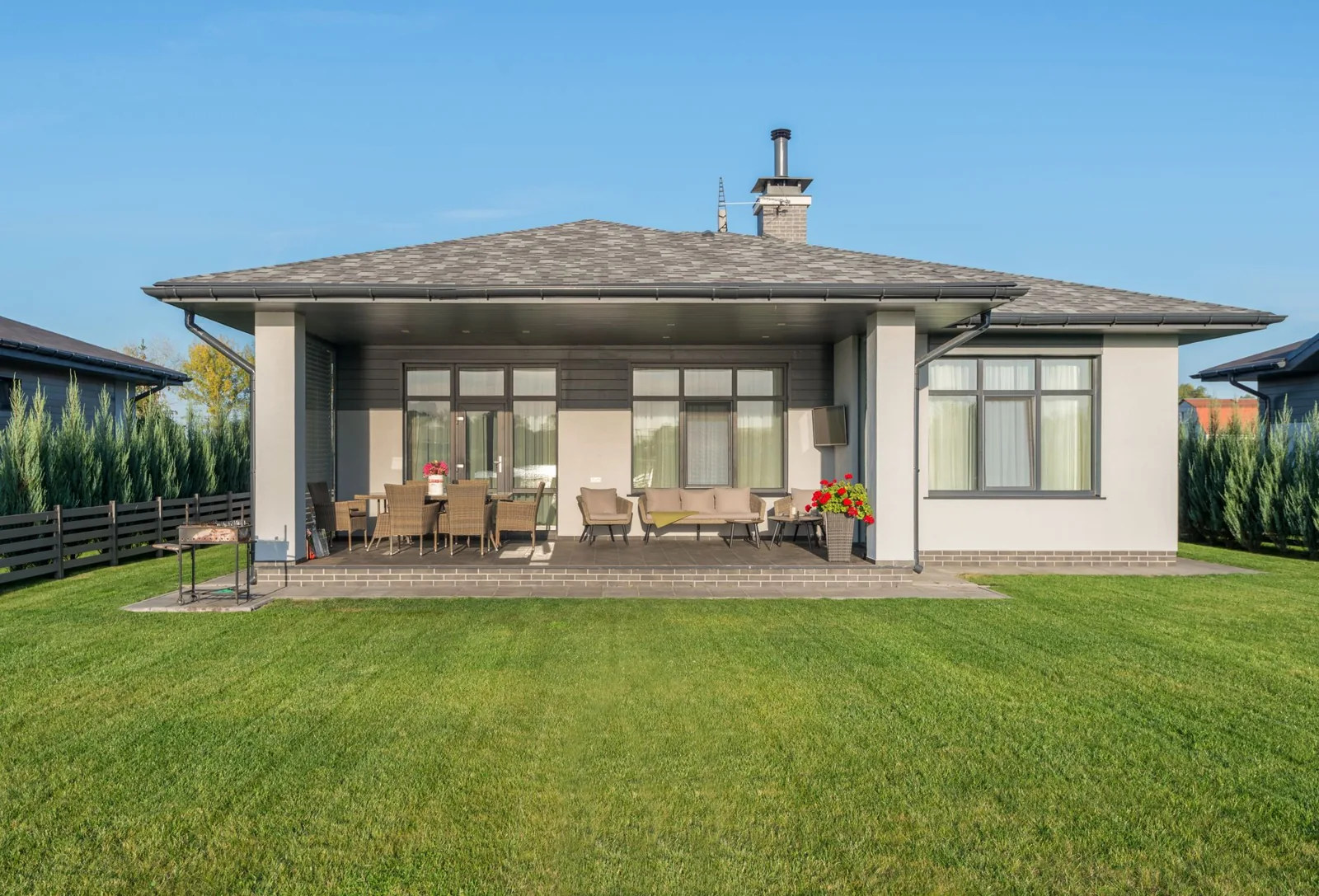
One Story House Exterior Design Ideas That Add Instant Curb Appeal
A one-story house has a low, horizontal profile that reads as approachable, efficient, and easy to maintain — but that same long shape can look flat or dated if the exterior hasn’t been touched in a while. The good news is that one story house exterior design ideas don’t require a gut renovation to make a visible difference. A new front door, a refreshed color scheme, and a few well-placed landscape details can transform the whole property in a single weekend.
Whether you live in a 1960s ranch, a modern bungalow, or a compact cottage, the exterior is the first thing buyers, guests, and appraisers notice. In fact, a Remodeling Magazine Cost vs. Value report consistently ranks exterior upgrades — especially a new entry door and siding — among the highest-returning projects a homeowner can take on. Below, we break down the one story house exterior design ideas that give you the most impact per dollar, with real cost ranges, material picks, and a few cautions so you don’t overspend.
Why One-Story Homes Need a Different Exterior Approach
Two-story houses have height to hide behind. A one-story home doesn’t. Because everything sits on a single plane, the eye travels straight across the facade, which means flaws are harder to hide and proportions matter more. A ranch with a plain garage-dominant front and no visual anchors will look like a long box, while the same footprint with a defined entry, layered siding, and considered color can look custom-built.
There are three principles worth keeping in mind before you spend a dollar:
- Break up the horizontal run. Long, unbroken walls are the biggest curb appeal killer for single-level homes. Gables, board-and-batten panels, porch posts, and changes in cladding material interrupt the line.
- Anchor the entry. On a one-story house, the front door is competing with a garage and a wall of windows. It needs a bold color, a porch, or lighting to claim attention.
- Use vertical lines. Vertical siding, tall narrow windows, and trellises draw the eye upward and make the house feel taller than it is.
Siding and Cladding Ideas for One Story Houses
Siding is the single largest surface on the exterior, so it sets the tone for every other one story house exterior design idea you layer on top. On single-level homes, mixing two materials almost always looks better than one run wall-to-wall. A common winning formula is a main field of lap siding with a stone veneer or shake accent on the entry gable.
| Cladding Option | Installed Cost (per sq ft) | Lifespan | Best For |
|---|---|---|---|
| Vinyl siding | $3–$8 | 20–40 years | Budget updates, low maintenance |
| Fiber cement (James Hardie) | $6–$11 | 30–50 years | Painted-wood look, fire resistance |
| Cedar or engineered wood | $8–$14 | 20–30 years (with upkeep) | Craftsman and mid-century styles |
| Stone veneer (accent only) | $10–$20 | Lifetime | Entry and gable focal points |
For a 1,500-square-foot ranch, re-siding the whole exterior in vinyl typically runs $7,500 to $15,000 installed, while fiber cement pushes that to $15,000 to $25,000. If a full re-side is out of budget, a stone veneer accent on the front gable or around the entry costs roughly $2,000 to $5,000 and delivers a disproportionate visual payoff.
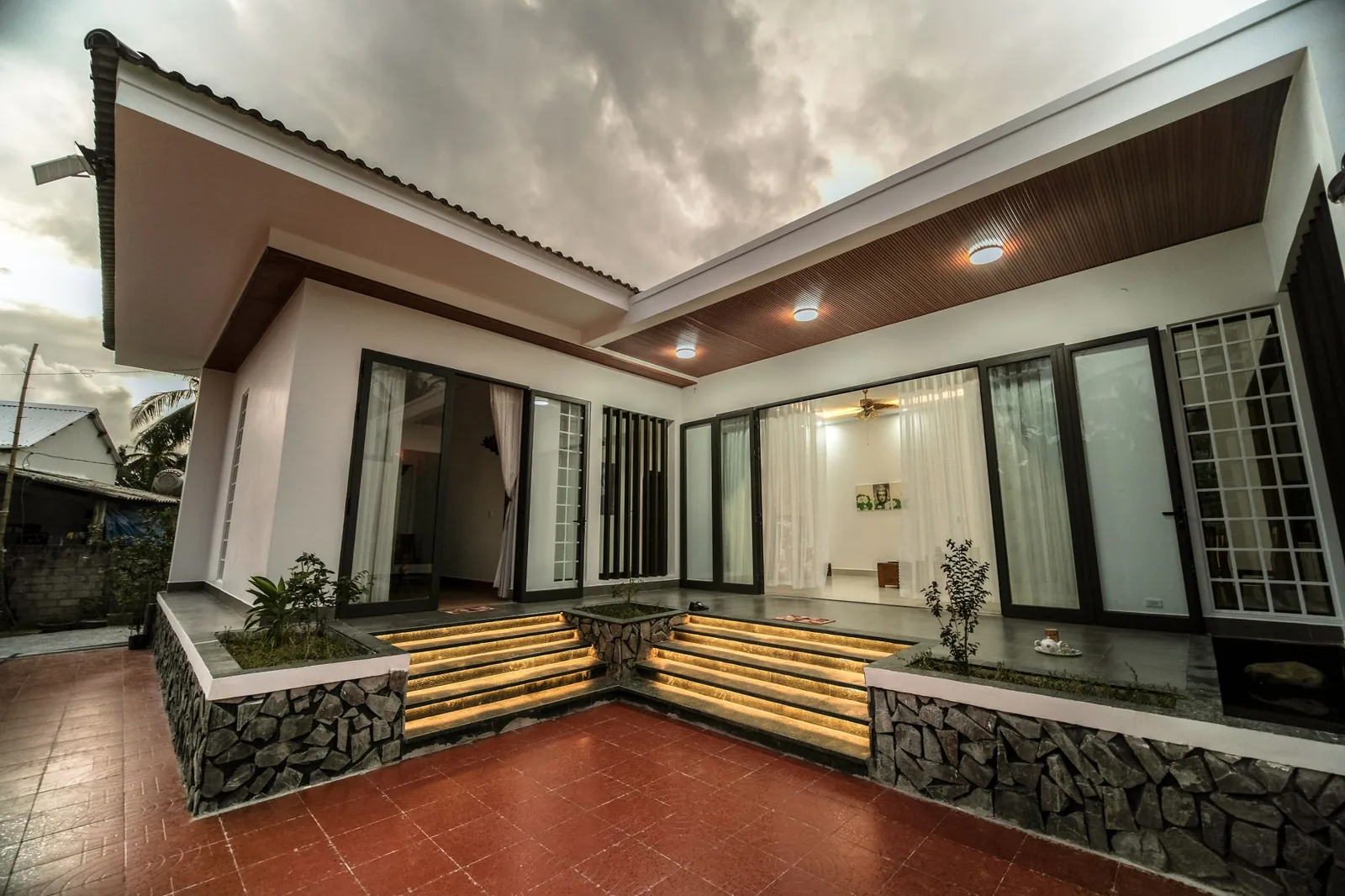
Photo by Pew Nguyen via Pexels
Board-and-batten is having a moment on one-story homes precisely because its vertical lines counter the low, wide shape. It reads as modern farmhouse or coastal, and it pairs cleanly with lap siding or brick. If you want the look without the maintenance, James Hardie and LP SmartSide both make pre-primed vertical panels that hold paint for a decade or more.
Exterior Color Ideas That Flatter a Low Profile
Color does more than look pretty — it changes how tall and wide a house appears. Light, low-contrast palettes make a single-level home feel airy and larger, while a dark body color with crisp white trim can make a small ranch look grounded and expensive.
A few one story house exterior design ideas worth stealing from recently renovated homes:
- Warm white body, black windows, natural wood door. A modern favorite that works on ranch, bungalow, and cottage styles alike.
- Deep charcoal or navy siding with a wood-stained front door. Dark colors recede, which can make a boxy home look slimmer.
- Sage green or greige with white trim. Safe, timeless choices that photograph well for listings.
- Two-tone split. Use a darker color on the lower band and lighter above to create the illusion of height.
One rule to respect: on a single-story home, avoid more than three colors on the facade. Body, trim, and one accent (usually the door) is the sweet spot. Add a fourth and the horizontal lines start to look busy.
Porch, Entry, and Doorway Upgrades
The front entry is where most of the value — and most of the compliments — come from. On a one-story house, a modest porch does two jobs at once: it gives the door a place to land visually and it breaks up the long roofline.
If you already have a covered porch, upgrade what’s already there rather than rebuilding. New porch posts (or wrapping existing ones in PVC sleeves), a fresh ceiling in a pale blue or stained wood, and updated porch lighting can revive the whole entry for under $1,500. If you don’t have a porch, a simple 4-by-8-foot gable roof over the door — often called a portico — runs $3,000 to $6,000 and is one of the highest-impact one story house exterior design ideas for a bare facade.
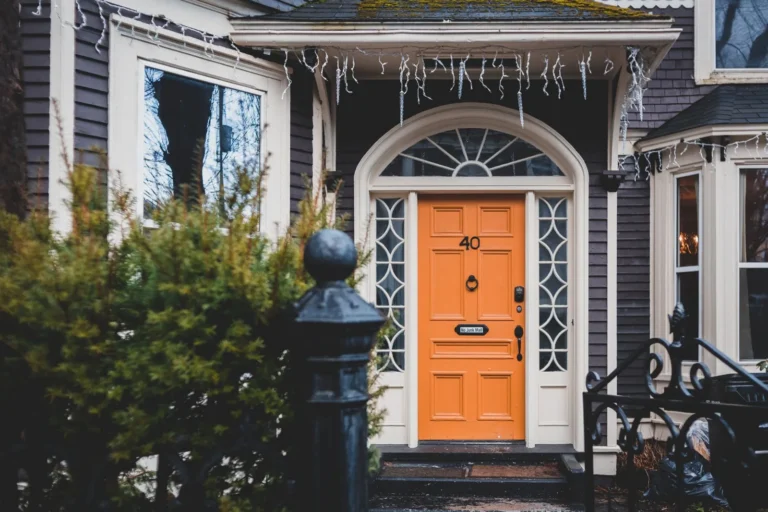
The door itself matters more than people expect. A fiberglass door with a bold paint color — think classic red, deep teal, or black — costs $800 to $2,500 installed and is repeatedly cited as a top-returning project. Match it with a wider walkway (at least 4 feet) and a clearly marked house number, and the entry reads as intentional rather than an afterthought. For more on making the entry shine, see our guide to front porch design ideas.
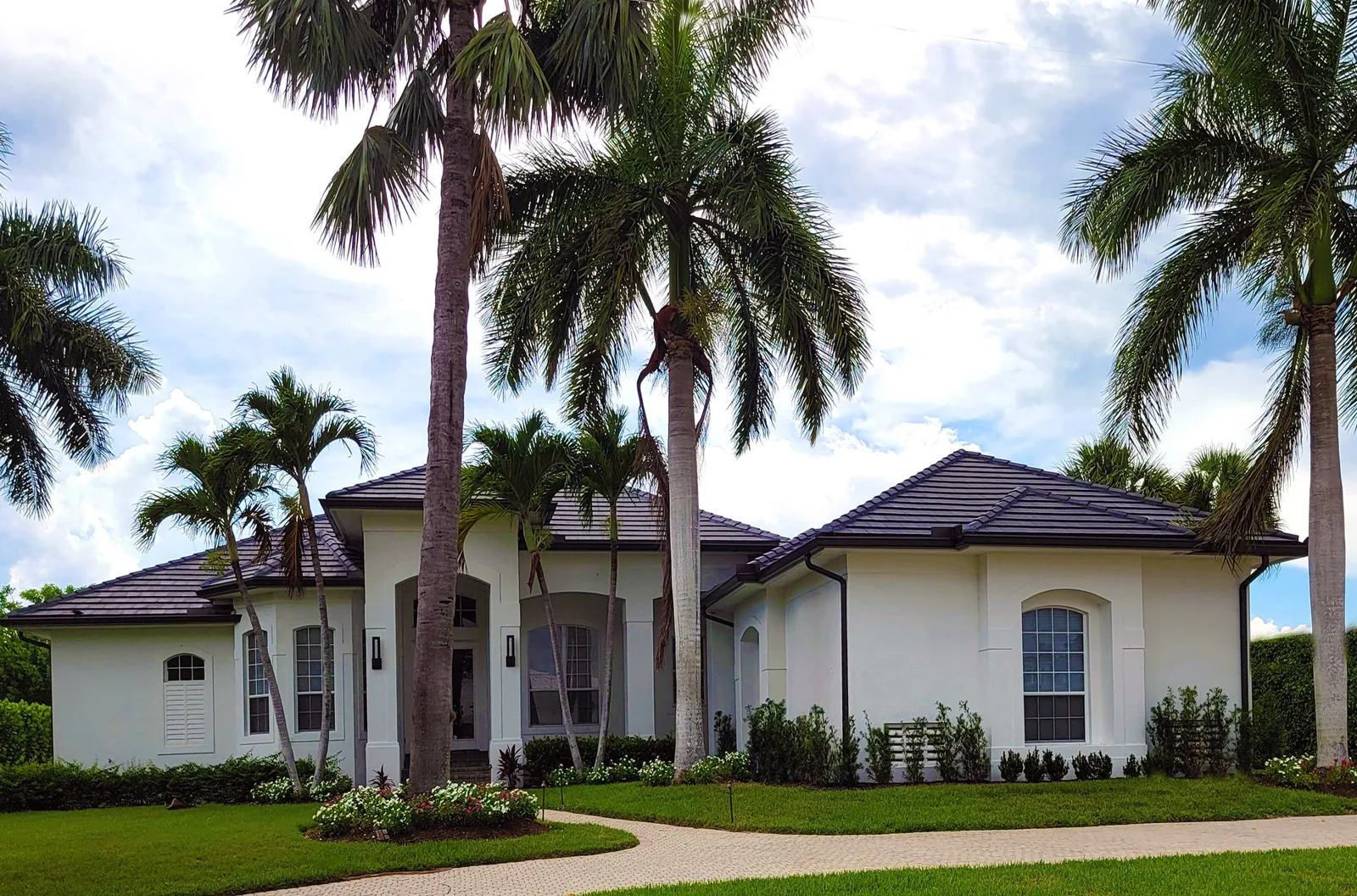
Photo by Christopher Moon via Pexels
Landscaping and Hardscaping That Frame the House
Landscaping is the cheapest way to make a one-story house look finished, because plants add the vertical interest the architecture lacks. The goal is to frame the house, not hide it — keep foundation plantings trimmed to stay below the windowsill line.
Start with the driveway and walkway, since they lead the eye to the front. A cracked asphalt drive can be resurfaced for $1.50 to $3.50 per square foot, or edged with a paver border for a few hundred dollars. A paver or stamped-concrete walkway replacement runs $1,800 to $4,000 and instantly sharpens the entry.
For plantings, layer in three heights: low ground cover at the front, mid-height shrubs (boxwood, hydrangea, dwarf conifers) in the middle, and one or two taller accents — a specimen Japanese maple or a pair of columnar trees — to anchor the corners. Mature foundation beds done by a landscaper typically run $1,500 to $4,000, but a DIY weekend version with 15 to 20 nursery plants can be done for $300 to $800. For budget-friendly landscaping specifics, check out curb appeal ideas on a budget.
Budget One Story House Exterior Design Ideas
Not every upgrade needs a contractor. Several high-impact moves cost a few hundred dollars and a weekend:
- Paint the front door and shutters — $100–$250 in materials.
- Replace dated house numbers, mailbox, and porch light — $150–$400 total.
- Pressure-wash siding, walkways, and the driveway — a $300 rental or a $150 annual pro visit.
- Add window boxes or symmetrical potted plants — $100–$300.
- Refresh mulch and edge the beds — $100–$200, and it’s the highest-value-per-dollar task on the list.
Layering these small one story house exterior design ideas together produces a compound effect. A pressure-washed house with a painted door, new lighting, and crisp bed lines looks like it was professionally staged, even when nothing structural changed. Add outdoor lighting — sconces by the door and path lights along the walkway — and the curb appeal carries into the evening. We cover the options in our exterior lighting ideas for homes article.
Frequently Asked Questions
What is the cheapest way to improve a one-story house exterior?
Pressure-washing the siding and hardscaping, repainting the front door, and refreshing mulch are the three cheapest moves, totaling $300 to $600 in materials. Together they read as a mini makeover without touching the structure.
What color makes a one-story house look bigger?
Light, low-contrast colors — warm white, soft greige, pale sage — reflect more light and make a single-level home feel larger. Pair a light body with crisp white trim and avoid dark, heavy colors on the main field if size is your concern.
Does board-and-batten work on a one-story house?
Yes, and it’s one of the best siding choices for a low profile. The vertical lines draw the eye upward, which visually counters the long horizontal run of a ranch or bungalow.
How much does it cost to re-side a one-story house?
For a typical 1,500-square-foot single-level home, vinyl siding runs roughly $7,500 to $15,000 installed, while fiber cement runs $15,000 to $25,000. Accent-only treatments like a stone veneer gable cost $2,000 to $5,000.
What exterior upgrade adds the most value?
A new entry door and a stone veneer accent are consistently among the top-returning exterior projects, per Remodeling Magazine data reviewed by Bob Vila. Both return a large share of their cost at resale.
The Bottom Line
One-story houses don’t need to work hard to look good — they need the right proportions. Break up the long horizontal run with mixed siding or vertical board-and-batten, anchor the entry with a bold door and a defined walkway, and finish with layered landscaping that adds the height the architecture doesn’t have. Most of the highest-impact one story house exterior design ideas are incremental, which means you can start with a $300 weekend refresh and grow into a full re-side over time.
For more ways to lift the front of your home, read our guides to curb appeal ideas for ranch style homes and exterior remodel ideas to boost home value.