Exterior Lighting Ideas for Homes: 12 Ways to Brighten Curb Appeal and Security
Walk down any well-kept street after dark and the houses that stand out usually share one thing: a lighting plan that was designed, not left to a single porch bulb. The best exterior lighting ideas for homes are rarely about one expensive fixture. They’re about layering a few well-placed lights so the walkway, the front door, and the landscaping all read clearly at night.
Good exterior lighting does three jobs at once. It makes the house look better from the curb, it makes the front entry safer to navigate, and it signals that the property is lived-in and watched. A $40 motion-sensor floodlight can do as much for security as a $400 camera, and it costs only a few dollars a year to run.
This guide covers the fixtures, the placement rules, and the real costs, so you can light your home’s exterior without lighting up the whole neighborhood.
Why Exterior Lighting Is Worth the Investment
Exterior lighting is one of the cheapest curb-appeal upgrades you can make, and it’s one of the few that pays off every single night rather than only when a guest arrives. A full front-yard lighting setup — porch sconces, a few path lights, and one or two accent lights — typically runs $300 to $1,500 installed, far less than a new front door or a paint job.
The return shows up in three places. First, curb appeal: buyers and neighbors judge a home at night the same way they do at noon, and a dark house looks neglected. Second, safety: uneven steps, a curved walkway, or a change in grade is a lawsuit waiting to happen, and a light at the right height removes the guesswork. Third, security: per Energy.gov, outdoor lighting with motion sensors or photocells is one of the most effective, lowest-cost deterrents you can install because it removes the shadows intruders rely on.
Modern LED fixtures have made the running costs almost irrelevant. A 12-watt LED path light left on for six hours a night draws less than $0.02 of electricity per day, so an entire landscape lighting system often adds under $10 a month to the bill.
Front Porch and Entry Lighting Ideas
The front entry is the most important surface to light, and it deserves a fixture sized to the door rather than a bare bulb. A standard front door looks best with a sconce, lantern, or pendant that is roughly one-quarter the height of the door. For a 6-foot-8-inch door, that means a fixture around 16 to 20 inches tall, mounted at eye level — 66 to 72 inches from the ground.
What to consider at the entry:
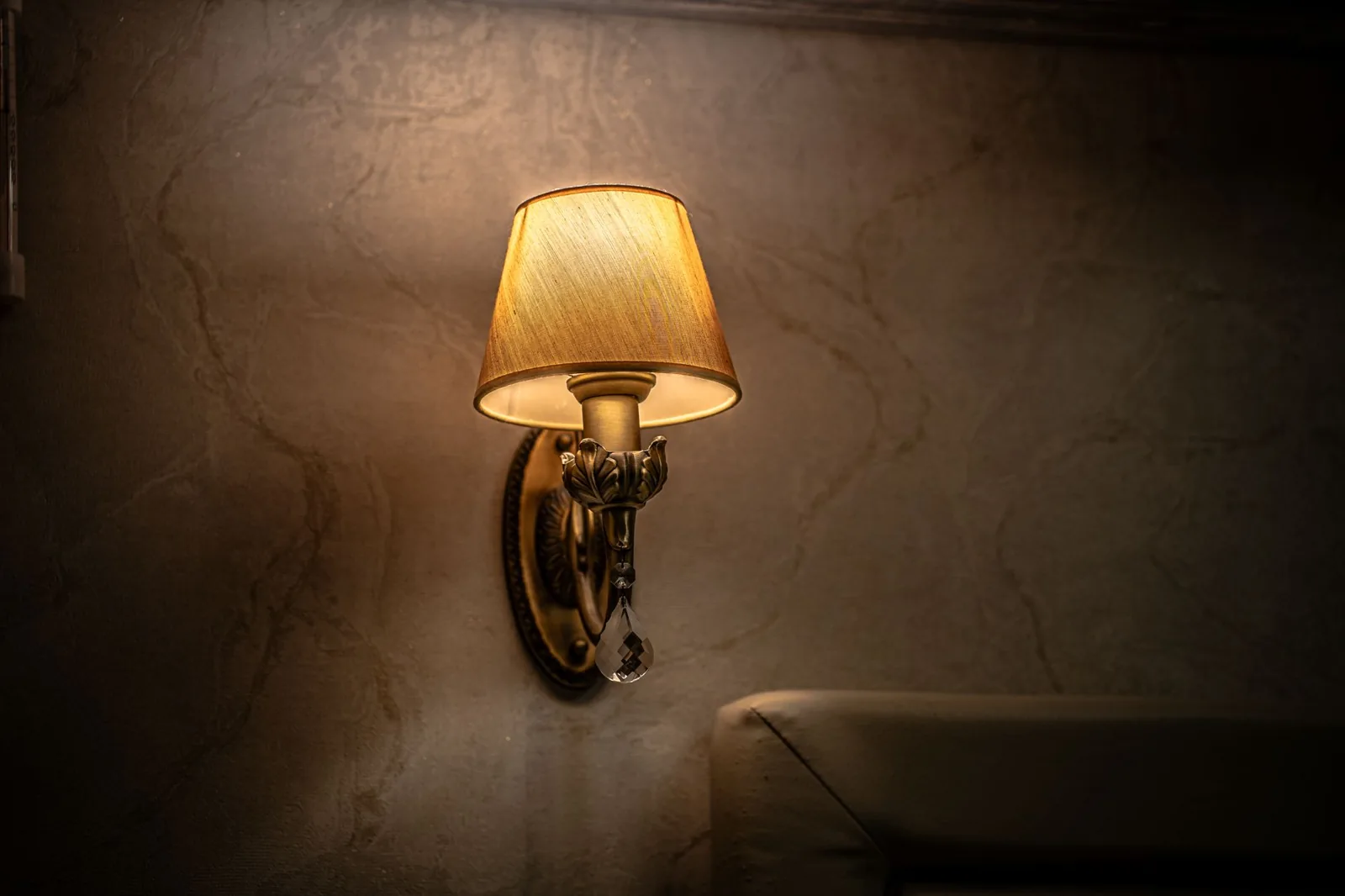
- Wall sconces — one on each side of a double door, or a single sconce on the latch side for a standard door. Look for fixtures rated for wet locations.
- Pendant lights — best under a covered porch with a ceiling height of at least 8 feet, hung so the bottom of the fixture clears 7 feet.
- Lantern-style coach lights — a classic look that pairs well with brick, stone, and traditional siding.
- Dusk-to-dawn photocells — a $10 to $20 sensor that switches the light on at sunset and off at sunrise, so you never leave it on all day by accident.
Warm light matters more than brightness here. A 2,700K to 3,000K bulb at 100 to 200 lumens feels welcoming, while a 5,000K bulb at the door reads cold and clinical.
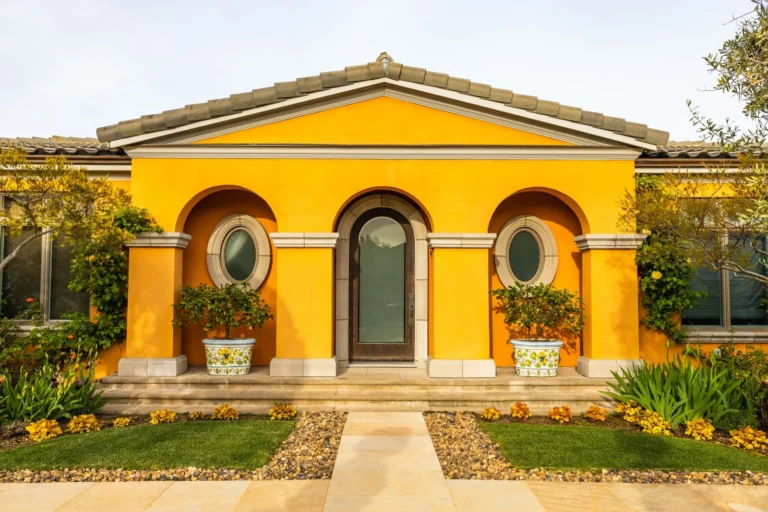
Photo by Julia Filirovska via Pexels
Path, Driveway, and Landscape Lighting
Path lighting is where most homeowners either overdo it or skip it entirely. The goal is not to make the walkway look like a runway; it’s to mark the edges and any changes in direction so someone can walk the route without looking down.
The rules of thumb that professional installers follow:
- Space path lights 6 to 8 feet apart, staggered on alternating sides rather than in a straight, evenly spaced line.
- Use low-voltage 12-volt systems for anything that will run every night. They’re safe to install yourself and cost pennies to operate.
- Aim fixtures down, not into a neighbor’s window or across the street. Light pollution is a real complaint, and many HOAs regulate it.
- Uplight one or two trees or an architectural feature rather than every shrub. A single 5-watt uplight on a mature tree creates more drama than a dozen scattered accents.
Driveways present a different problem: they’re wide and long, so they need task lighting rather than decoration. A motion-activated floodlight or a set of bollard lights along the drive edge is usually the right call. Bollard fixtures cost $80 to $200 each, which makes them worth reserving for longer drives where a car actually needs help finding the turn.
Security and Flood Lighting Ideas
Security lighting is functional first and pretty second, but it doesn’t have to be ugly. The mistake most people make is buying the brightest fixture at the hardware store and pointing it straight at the street, which creates glare and does more to blind you than to deter anyone.
A better approach:
- Motion-sensor floodlights — mount them 9 to 10 feet high, angled down at a 45-degree angle so the beam covers the yard without washing the windows.
- Two-fixture coverage — one light at the garage corner and one at the back door covers more ground than a single light, because a single light leaves a long shadow on the opposite side of the house.
- Lumen targets — 700 to 1,500 lumens is plenty for a floodlight. Anything brighter just creates glare.
- Smart controls — a $30 Wi-Fi switch or a smart bulb lets you trigger lights from your phone when you’re away, which is the single best way to make a house look occupied.
A common upgrade is swapping the old halogen flood bulbs for LED versions. Halogen floods burn around 90 to 120 watts and fail every year or two, while an equivalent LED uses 10 to 20 watts and lasts a decade. The savings over the life of the bulb usually pay for the fixture.
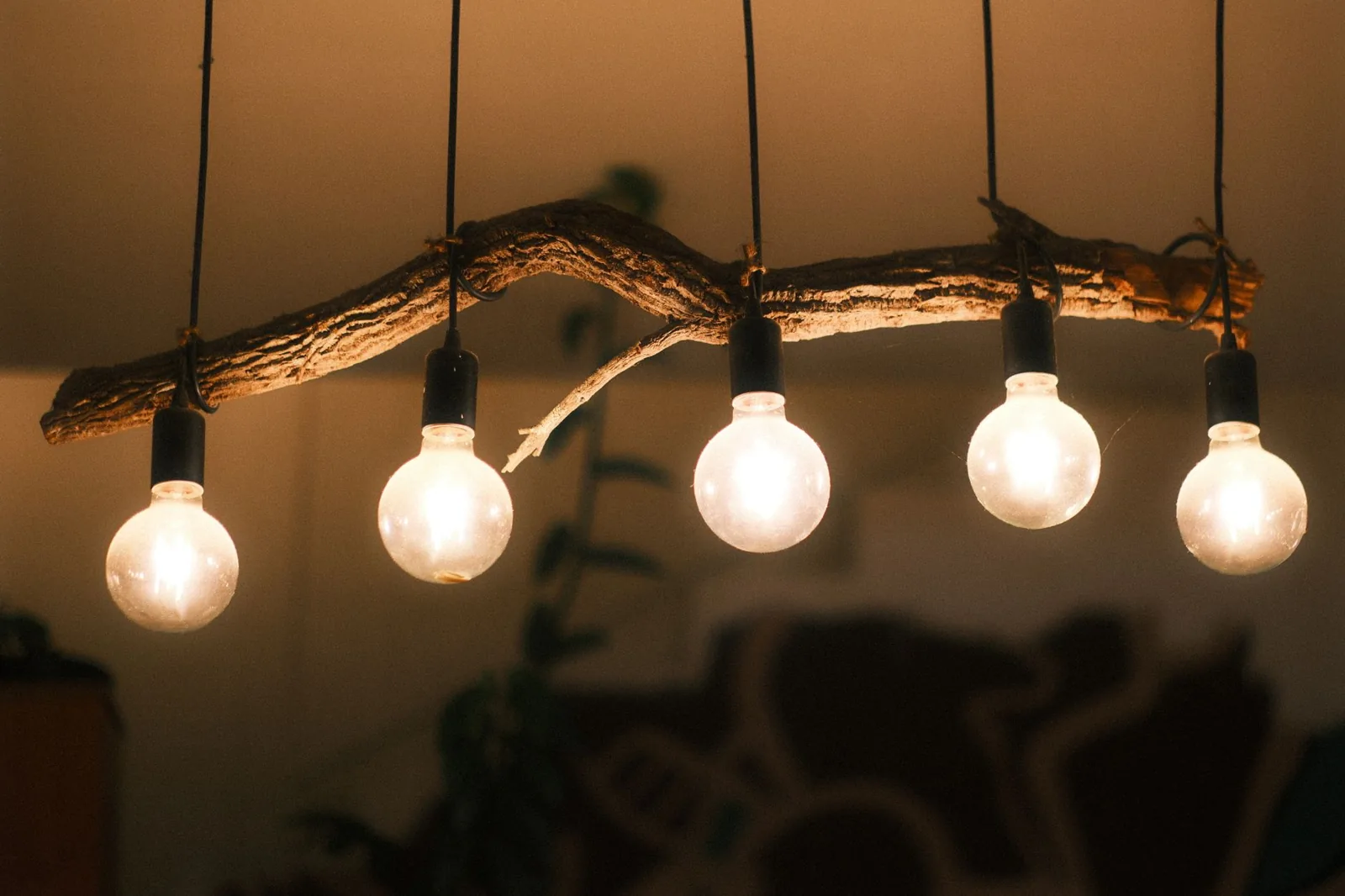
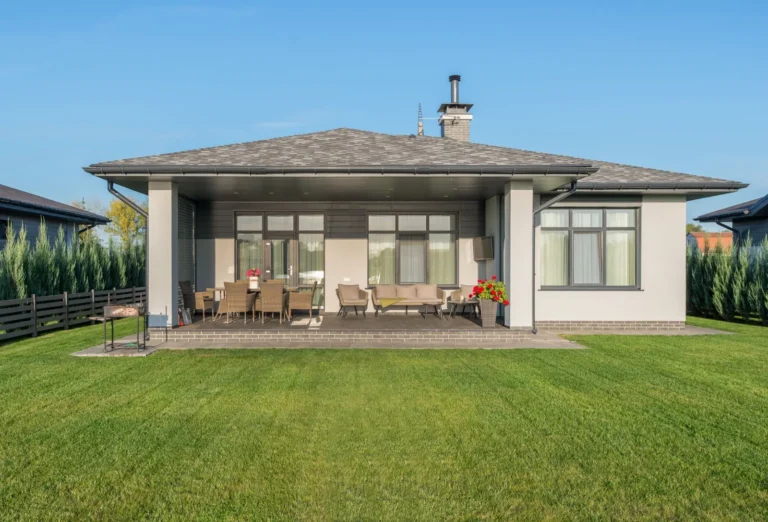
Photo by Vũ Nguyễn via Pexels
Accent, String, and Smart Lighting
Once the entry, the path, and the perimeter are handled, accent lighting is where the character comes from. This is the layer that makes a house look designed rather than simply lit.
String lights have moved from backyard patios to front porches and are the fastest, cheapest way to add warmth. A 48-foot commercial-grade string light set runs $40 to $80 and can be hung in an afternoon with cup hooks or a cable guide. For year-round use, buy sets rated for outdoor use and check that the sockets are sealed.
Other accent options worth considering:
- Step lights — recessed into risers or mounted on the tread, they prevent the most common nighttime fall and look sharp on a porch.
- Wall-wash fixtures — aimed at a stone or brick facade, they bring out texture that disappears after sunset.
- Smart color bulbs — useful for holidays, but keep them on warm white the other eleven months.
- Timer and photocell combos — the cheapest way to make sure nothing stays on all day, and nothing leaves you fumbling in the dark.
If you’re layering from scratch, the order that works is: entry first, then path, then security, then accent. Every layer you add makes the previous one look better.
What Exterior Lighting Costs
Lighting costs span a wide range because the fixture count, the wiring, and the controls all move the total. The table below compares the four most common types at typical mid-range prices.
| Feature | Path Lights | Porch Sconces | Flood/Security | String Lights |
|---|---|---|---|---|
| Typical cost per fixture | $40–$120 | $100–$300 | $30–$80 | $40–$80 per set |
| Best for | Walkways, garden beds | Front entry, garage | Perimeter, driveway | Porches, patios |
| Power source | 12V low-voltage | 120V line voltage | 120V line voltage | 120V plug-in |
| DIY difficulty | Easy | Moderate | Moderate | Easy |
| Typical lifespan | 10+ years (LED) | 15+ years (LED) | 10+ years (LED) | 2–4 years per string |
Labor is the variable that surprises people. A licensed electrician charges $65 to $120 an hour, and adding a new fixture where no wiring exists — say, a floodlight at the back corner of the house — can take one to three hours. If you already have a fixture box in place, swapping the fixture is a 30-minute DIY job. If you need new wire run, budget for the electrician. For a full breakdown of how lighting fits into a larger project, see our home exterior renovation cost breakdown.
Frequently Asked Questions
How many lumens do I need for exterior lighting?
Path and porch lights need 100 to 200 lumens, entry sconces 100 to 300, and floodlights 700 to 1,500. The goal is to light surfaces evenly, not to maximize output, so resist the urge to buy the brightest fixture on the shelf.
Can I install low-voltage landscape lighting myself?
Yes. Low-voltage 12-volt systems plug into a transformer and are safe enough for a careful DIYer, which is why they’re the most common weekend project. Line-voltage (120-volt) fixtures that need new wiring are the ones that call for an electrician.
Do exterior lights raise my electric bill?
Barely. A 12-watt LED path light running six hours a night costs about $0.02 a day. An entire landscape lighting system typically adds less than $10 a month, and swapping old halogen floods for LEDs usually cuts the bill in half.
What color temperature is best outdoors?
Warm white — 2,700K to 3,000K — is the standard for porches, paths, and landscape lighting. It flatters skin tones and stone alike. Reserve cool 4,000K to 5,000K bulbs for security floodlights where brightness matters more than mood.
Should exterior lights be on all night?
For security, motion sensors and dusk-to-dawn photocells are better than leaving lights on constantly. Leaving a porch light on all night is fine and common, but layering motion-activated perimeter lights gives you more security for less electricity.
The Bottom Line
Exterior lighting is the rare home upgrade that improves how your house looks, how safe it is, and how much it costs to run — all at once, for a few hundred dollars. Start with the entry and the path, add a motion floodlight for security, and only then spend on the accent and smart layers that give the place personality. If the budget is tight, a single warm porch sconce and a $40 floodlight still beat a dark house every time.
For more ways to stretch a small budget across the whole front of the house, read our curb appeal ideas on a budget, and if you’re reworking the entry itself, pair the lighting with these front porch design ideas. For a deeper look at installation specifics and fixture selection, This Old House has one of the most reliable guides on the subject.