How to Choose Exterior Trim Color: A Homeowner’s Guide
Picking a trim color sounds like the easy part of an exterior paint job — until you stand in front of a fan deck with four hundred near-white chips and realize trim is what frames the entire house. Get it right and your home looks crisp and intentional; get it wrong and the siding and roof stop working together. Here’s how to choose exterior trim color without the second-guessing.
The good news is that exterior trim follows a handful of rules that professional painters and color consultants rely on, and none of them require a design degree. You anchor the trim to the fixed colors already on the house — the roof, the siding, the stone or brick — then test a few candidates in real light. That’s the whole method, and it’s what separates a house that looks “done” from one that looks like a repaint in progress.
Why Trim Color Carries the Whole House
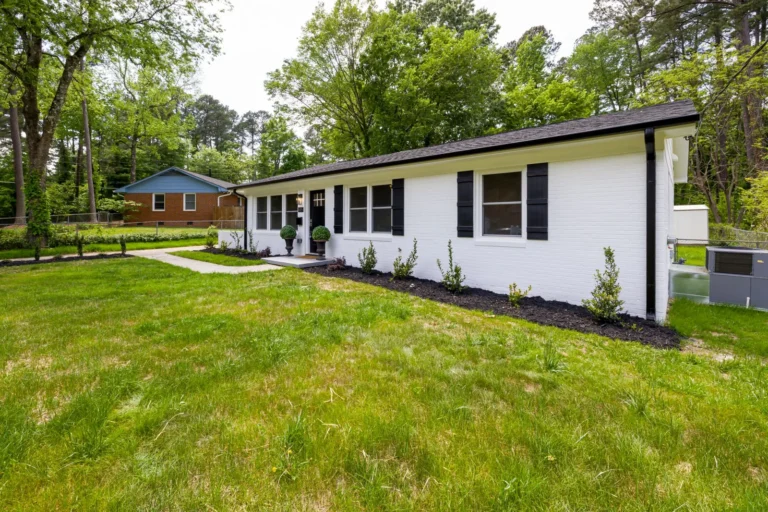
Trim — the fascia, soffits, corner boards, window and door casings, and the garage-door surround — makes up maybe 10 to 15 percent of the painted surface, but it sets the visual tone for all of it. Trim is the outline, the frame, the thing your eye reads first from the curb. A well-chosen trim color can make a dated 1970s ranch look sharp, and it can make a new build look finished instead of builder-basic.
Think of trim as the punctuation of the facade. White or light trim against a mid-tone siding reads clean and traditional. Dark trim against light siding reads modern and grounded. Same-family trim — a shade or two off the siding — reads quiet and expensive. Each approach sends a different signal, which is why the right trim color depends less on this year’s trends than on what your house is already telling you.
Start With the Colors You Can’t Change
Before you open a paint deck, walk around the house and write down the fixed elements. These are the colors that will stay no matter which trim you pick:
- The roof. Shingles, tile, or metal. A gray or black roof is neutral and flexible; a brown, red, or green roof narrows your palette considerably.
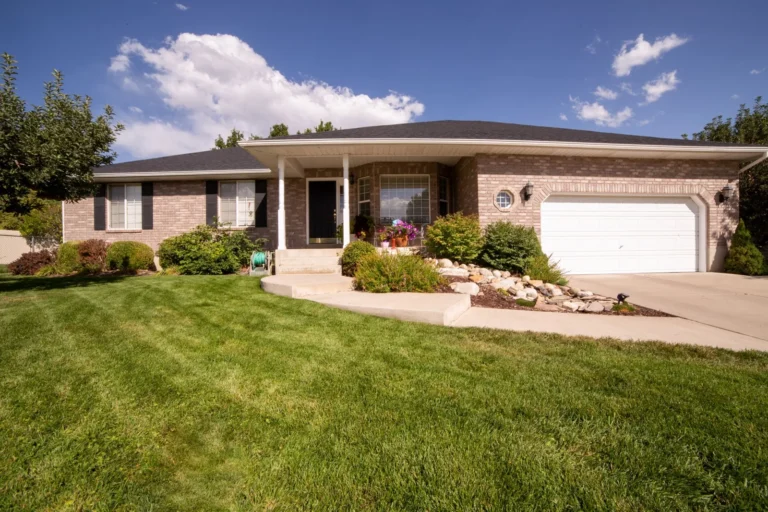
- Masonry. Brick, stone veneer, or a fieldstone foundation. A single brick face often holds three to five colors, and those are your best trim candidates.
- Fixed materials. Gutters, downspouts, metal roof accents, window frames you’re not painting, and the driveway color.
- Year-round landscaping. Evergreens and mature trees pull cool, green tones; a sunny xeriscape pulls warm tones.
Once that list is written down, choosing trim stops being a blank-canvas problem and becomes a matching problem — which is much easier to solve. Most trim mistakes happen when a homeowner falls in love with a color in isolation and ignores the roof or brick that’s already there.

Photo by RDNE Stock project via Pexels
Three Trim Strategies That Cover Almost Every House
There are really three ways to choose exterior trim, and you can slot most homes into one of them in a few minutes.
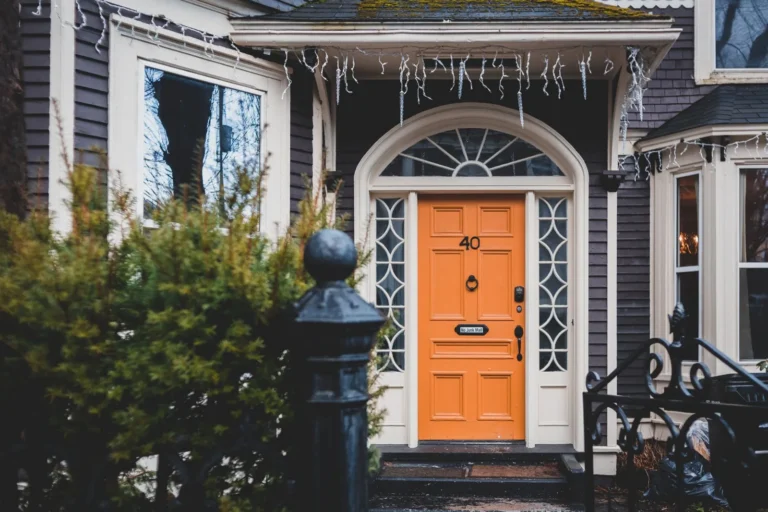
Strategy 1: White or off-white trim (the safe classic). A soft white — not a stark, blue-white, which can look cold — pairs with nearly every siding color. Sherwin-Williams “Pure White” and “Alabaster,” and Benjamin Moore “White Dove,” are workhorses here. White trim raises contrast, makes windows pop, and reads welcoming. It’s the default for traditional Colonials, farmhouses, and anything with wood or fiber-cement siding.
Strategy 2: Same-family trim (the quiet, high-end look). Choose a trim two to three steps lighter or darker than the siding on the same color card. A sage-green house with pale-green trim, or a deep-navy house with a light blue-gray trim, looks cohesive and custom rather than tract-built. This approach makes a house look considered without shouting.
Strategy 3: Dark or contrasting trim (the bold, modern look). Charcoal, near-black, deep bronze, or forest green trim against a light body is the signature of the modern farmhouse and contemporary builds. It grounds the house and hides dirt and pollen along high-traffic trim lines. Keep dark trim to the accents — casings and fascia — rather than drowning the whole facade.
| Strategy | Best for | Trim examples | Risk |
|---|---|---|---|
| White/off-white | Traditional, farmhouse, brick | SW Pure White, BM White Dove | Looks stark if too blue-white |
| Same-family | Modern, craftsman, wood | A shade lighter/darker than siding | Falls flat if contrast is too low |
| Dark/contrast | Modern farmhouse, contemporary | BM Wrought Iron, SW Urbane Bronze | Overwhelms small houses |
How to Choose Exterior Trim Color for Common Siding Types
Siding material matters more than most homeowners realize, because each surface interacts with trim differently.
Vinyl siding. Vinyl usually ships with a coordinating trim color — manufacturers publish a “coil match” chart that pairs each siding shade with a matching trim and soffit color. Start there; it removes most of the guesswork. If you want to go custom, white and light neutrals are the safest bets, since vinyl’s slight sheen can clash with muddy dark trim.
Fiber cement and wood. These take paint beautifully, so you have the most freedom. White, soft off-whites, and dark charcoal all work. Fiber cement from James Hardie is often sold prefinished in a set palette, and the company’s Statement and Dream collections pair body and trim colors that are already tested together.
Brick. This is where trim choice pays off most. Don’t guess — pull the mortar color and one of the dominant brick tones and test them as trim. A red-brick house with warm cream trim looks grounded; the same house with bright white trim can look harsh. If brick is your main surface, read our guide to exterior paint color for brick houses.
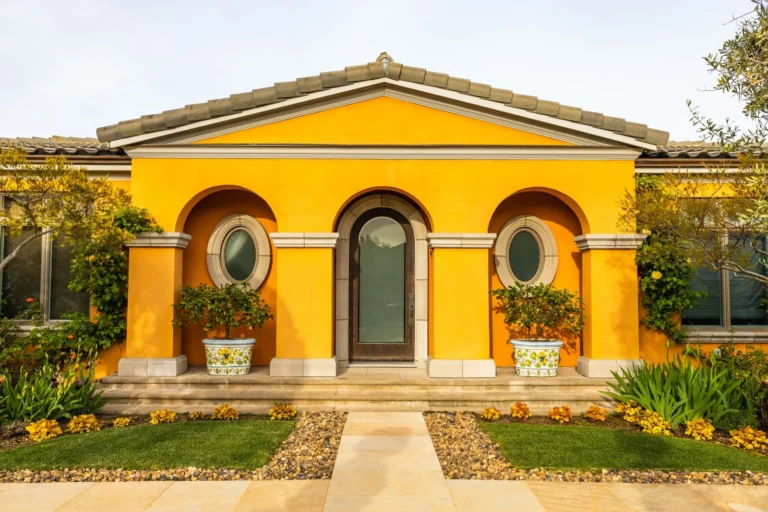
Stucco. Stucco’s flat, matte surface pairs well with slightly deeper trim, since a flat body plus flat white trim can read washed out. A stucco home in warm sand or taupe looks best with trim one to two shades deeper, or with dark espresso for contrast.
Stone and mixed facades. If your house mixes stone, shake, and siding, pick one trim color that works across all of them — usually a warm white or a deep neutral — so the mixed materials read as one composition instead of three.
Photo by Ikke mist deg selv Goshawk via Pexels
Test the Color Before You Buy the Gallons
This step separates a good trim job from a regret. A chip the size of a credit card will not tell you how a color looks across thirty feet of fascia in afternoon sun.
Buy a sample pot or a large peel-and-stick swatch — Sherwin-Williams and Benjamin Moore both sell 8-by-8-inch and larger stick-on samples — and place them in three spots: next to the roof line, beside a window, and against the brick or stone. Live with them for two or three days, and look at them at 8 a.m., noon, and just before sunset. Exterior trim color shifts hard with the light, and a cream that looks warm at noon can go gray at dusk. This Old House recommends testing large sample boards on the wall before committing to a color, for exactly this reason — you can choose exterior colors with confidence once you’ve seen them at scale.
Watch for undertones more than the color itself. Most trim mistakes come down to undertone — a “white” that leans pink next to warm brick, or a “gray” that leans blue next to a brown roof. If you can name the undertone, you can usually see the problem before you paint.
Exterior Trim Color Mistakes to Avoid
A few patterns show up again and again in repaints gone wrong:
- Stark, blue-white trim. It reads cold against warm brick and wood and can make a house look like it’s wearing primer.
- Trim darker than a dark roof. If your roof is near-black and your trim is near-black, the top of the house turns into a void.
- Ignoring the garage door. The garage can be 30 percent of your front elevation. If the trim gets painted and the garage door stays its old beige, the whole scheme breaks. Keep it in the plan from the start.
- Too many whites. Mixing a cool white fascia with a warm white window casing, two feet apart, looks like a patch job. Pick one white and stay consistent.
- Skipping the test board. Every professional color consultant tests large samples in real light. Skipping it is the single most common cause of a do-over.
Frequently Asked Questions
Should exterior trim be lighter or darker than the siding?
Both work, but they read differently. Lighter trim — classic white or cream — looks traditional and clean; darker trim — charcoal, black, deep green — looks modern and grounded. Same-family trim, a shade or two off the siding, reads quiet and custom. Match the strategy to your home’s style rather than to a trend.
What is the most popular exterior trim color?
White and soft off-whites still lead by a wide margin — shades like Sherwin-Williams Alabaster and Pure White and Benjamin Moore White Dove dominate. Dark trim in near-blacks and deep bronzes has grown fast over the last five years on modern farmhouse and contemporary homes.
Do I paint the trim before or after the siding?
Paint the body color first, then cut in the trim. Painting trim last gives you the cleanest edges where the two meet, and it’s easier to touch up trim against a finished body than the reverse. The one exception is when you’re painting a whole house exterior — plan the full sequence before you open a can.
How many trim colors should a house have?
One, in most cases. A single consistent trim color across fascia, soffits, casings, and corner boards ties the house together. If you want depth, use one trim color plus one accent color for the front door only.
Does dark trim fade faster than white?
Yes, generally. Dark pigments absorb more UV and can chalk or fade sooner, especially on south- and west-facing walls. Use a high-quality exterior 100 percent acrylic paint with a satin or semi-gloss finish for dark trim, and budget for touching it up a couple of years sooner than white trim.
The Bottom Line
How to choose exterior trim color comes down to a simple order of operations: read the fixed colors on the house first, pick a strategy — white, same-family, or dark contrast — that fits your home’s style, then test large samples in real light before you commit. Trim is a small percentage of the surface and a large percentage of the impression, so it’s worth the extra few days of testing.
Once your trim is locked in, the fun part is building the rest of the palette around it. Look at our exterior paint color combinations for houses for full schemes that pair body, trim, and accent, or browse the best exterior paint colors 2026 for what’s trending this year. For a bolder direction, our dark exterior house paint ideas shows how dark body colors pair with light trim — the reverse of the classic formula.
Whichever way you go, buy the best exterior paint your budget allows and prep the surfaces properly. A great color on poorly prepared trim will fail within a few seasons, while a well-prepped surface makes even a simple scheme last. Get the trim right, and the whole house snaps into focus.