Front Porch Design Ideas to Transform Your Home’s Curb Appeal
A front porch does more than bridge the walkway and the front door. It is the first thing guests, neighbors, and buyers see, and it sets expectations for everything behind the door. Whether your home is a 1920s bungalow, a 1990s colonial, or a brand-new farmhouse, the right front porch design ideas can make a house feel finished, welcoming, and worth more than the sum of its parts.
Realtors routinely point to a tidy, well-designed porch as one of the highest-return exterior upgrades a homeowner can make. A 2024 Cost vs. Value report puts mid-range front entry upgrades among the better ROI projects in the exterior category, often recovering 70% to 90% of their cost at resale. You do not need a wraparound veranda to get there. A 40-square-foot stoop, rethought carefully, can deliver the same punch as a 300-square-foot porch.
This guide walks through front porch design ideas that work across budgets and house styles, from flooring and structure down to lighting, plants, and furniture.
Front Porch Design Ideas for Every Home Style
Your porch should look like it belongs to your house, not like a catalog photo bolted onto the wrong architecture. The best front porch design ideas start with the home’s existing lines and materials, then refine them.
Farmhouse and cottage homes shine with wide plank floors, chunky square columns, and painted wood railings. A simple gable roof over the entry, or a full shed roof running the width of the house, reads instantly “farmhouse” even on a newer build.
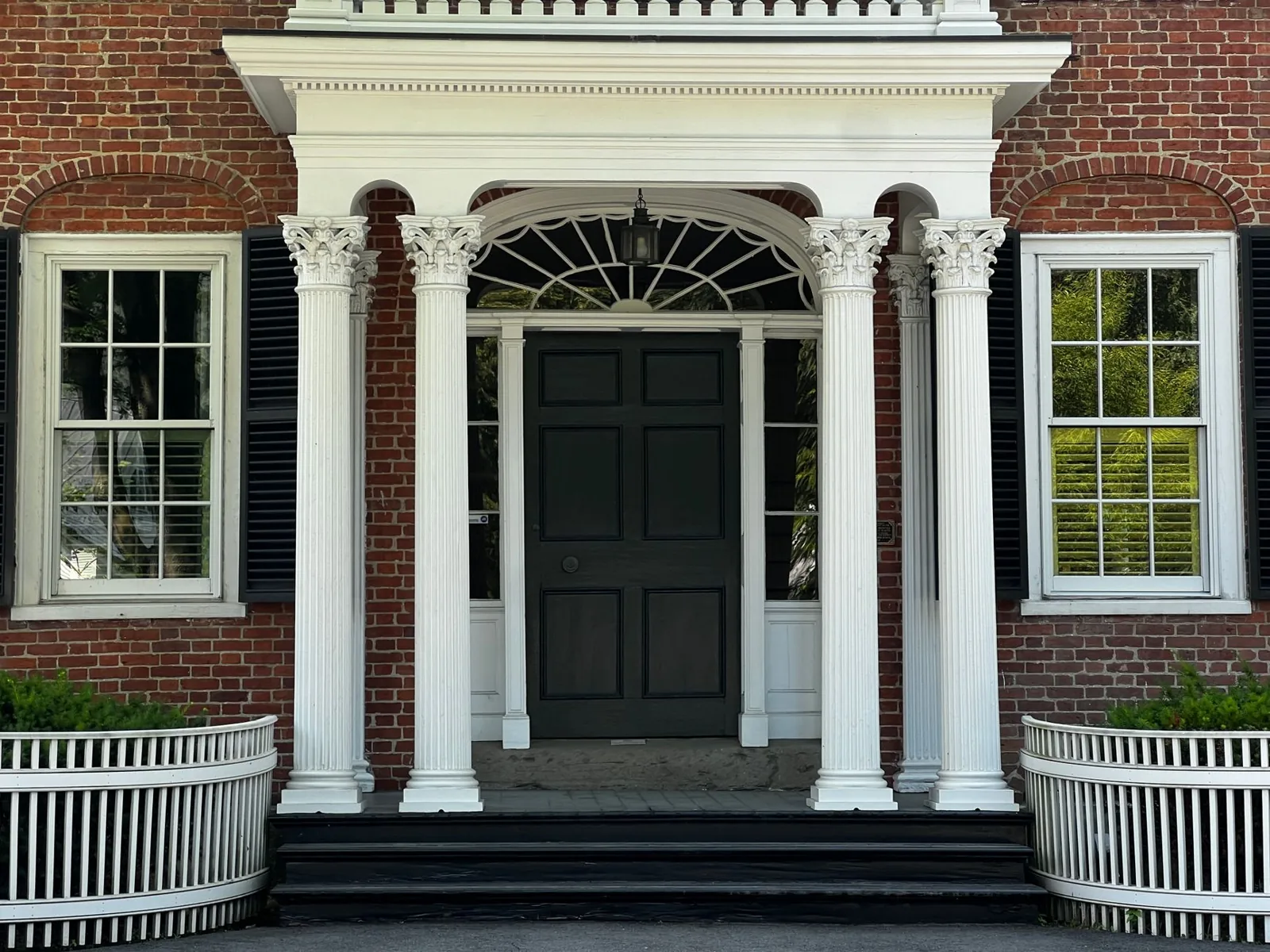
Colonial and traditional homes call for symmetry. Matching columns or pilasters on both sides of the door, a centered gable or portico, and black or deep-green shutters keep the look formal without feeling stiff. Stone or brick steps rather than bare concrete reinforce the weight of the style.
Modern and mid-century homes want restraint. Flat or low-slope rooflines, cable railings in black steel, and clean horizontal lines in the flooring do more than ornament. A single bold door color against neutral siding is often enough of a statement.
Ranch and one-story homes benefit from a long, low porch that stretches horizontally and anchors the house to the lot. Low-maintenance composite decking and a simple beam-and-post structure keep the project affordable while adding shade and usable square footage.
Pick Porch Flooring That Matches Your Climate and Budget
Flooring is the largest visible surface on any porch, so it drives both cost and maintenance. The right choice depends on where you live and how much upkeep you are willing to do.
- Pressure-treated pine runs roughly $2 to $5 per square foot installed. It is the cheapest wood option and takes paint or stain well, but it needs re-sealing every one to two years and can warp in damp climates.
- Composite decking (Trex, TimberTech, Fiberon) costs $8 to $14 per square foot installed. It resists rot, insects, and fading, and needs little more than an occasional hose-down. The higher up-front price pays off in a decade of near-zero maintenance.
- Stone, brick, or concrete pavers land between $12 and $25 per square foot installed. They handle freeze-thaw cycles better than wood and add a permanent, high-end feel, but they are heavy and can shift if the base is not prepared correctly.
- Painted porch-and-floor enamel on wood is the classic budget move, but it is a finish, not a material — plan on a fresh coat every two to three years in high-traffic areas.
For most homeowners in the Midwest or Northeast, where winters are wet and salty, composite or stone earns its cost. In dry Western climates, pressure-treated pine with a good stain can look great for years at a fraction of the price.
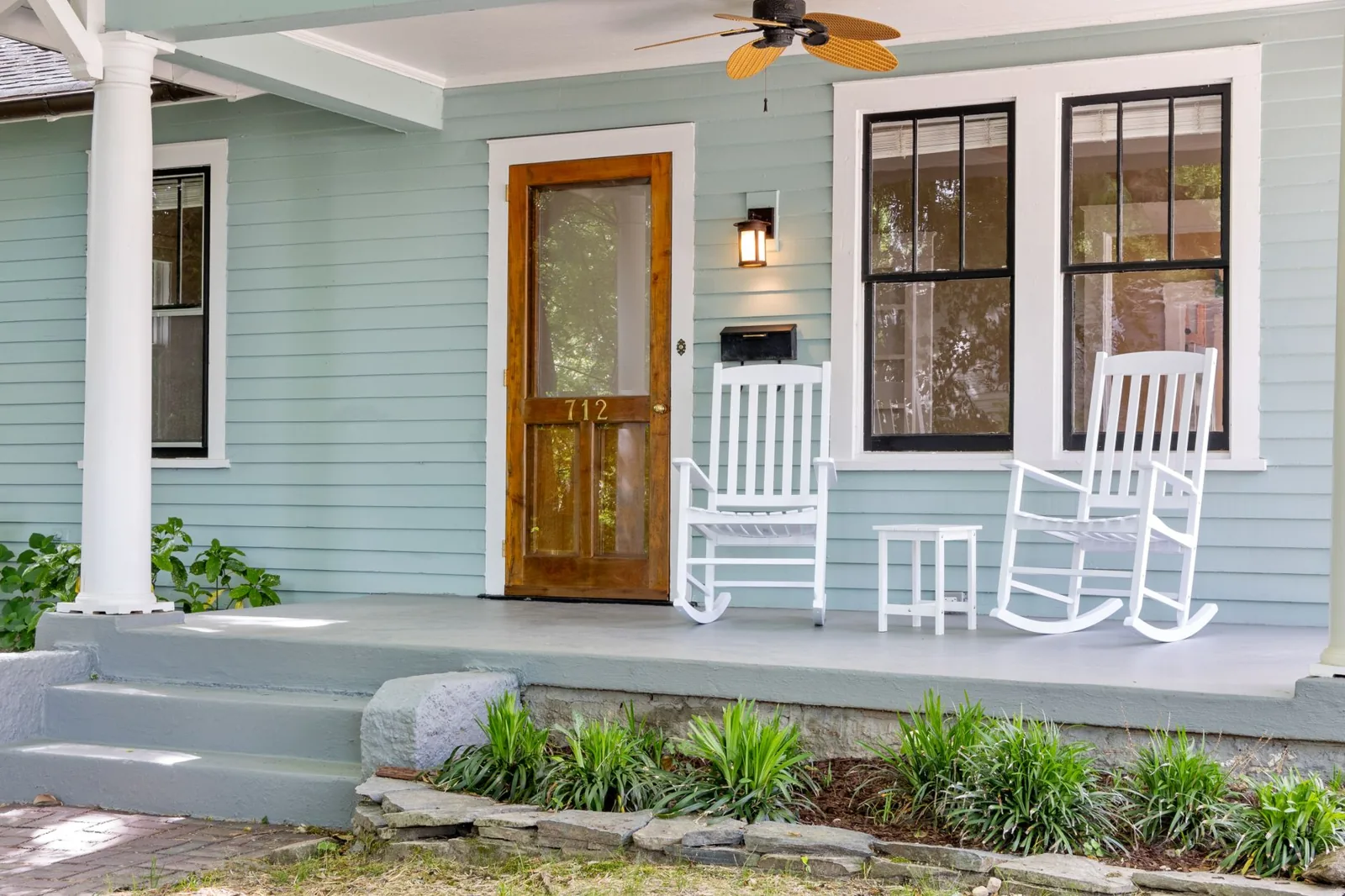
Photo by Curtis Adams via Pexels
Rails, Columns, and Roof Lines That Set the Tone
Structural details are where a porch stops being “a deck with a roof” and starts feeling intentional. Railings, columns, and the roof edge work together to frame the entry.
Column choice carries the most visual weight. Tapered Craftsman columns in wood or fiberglass signal an arts-and-crafts or bungalow home. Round or fluted columns read traditional; square, clean-edged posts read modern. Fiberglass columns hold up better than wood against moisture and insects and cost roughly $150 to $400 each, installed, depending on height and style.
Railings matter more for safety than looks, but they should not be an afterthought. Building codes generally require a railing when the porch floor sits 30 inches or more above grade, with balusters spaced no more than 4 inches apart. Cable railing runs $60 to $120 per linear foot and suits modern homes; aluminum or composite baluster railings cost $40 to $90 per linear foot and read more traditional.
The roof line is the cheapest big win. Adding a simple gable or shed roof over a bare stoop typically runs $2,500 to $8,000 depending on span and finish, and it transforms both the look and the function of the entry. A well-detailed fascia, soffit, and trim — even just repainted to contrast the siding — costs a few hundred dollars and sharpens the whole composition.
Lighting That Extends the Porch Into the Evening
A porch that goes dark at dusk does half its job. Layered lighting is the difference between a welcoming entry and a shadowy one.
Start with a ceiling or wall fixture at the door. A single fixture with two or three bulbs, or a pair of sconces flanking the door, gives even, flattering light. Budget $80 to $300 per fixture for good outdoor-rated (UL wet-location) hardware from brands like Hinkley, Kichler, or Progress Lighting.
Add a task layer where you need it. Recessed or semi-flush lights over a seating area let you actually use the porch at night. If your porch has a ceiling, pot lights spaced 4 to 6 feet apart keep glare down and coverage even.
Finish with a warm, low accent layer. LED strip or tape light tucked under the porch ceiling or along the fascia adds a soft glow for about $2 to $6 per foot. Solar path lights along the walkway, at $15 to $50 each, guide guests in without any wiring. Choose bulbs in the 2700K to 3000K range — anything cooler makes skin and siding look cold.
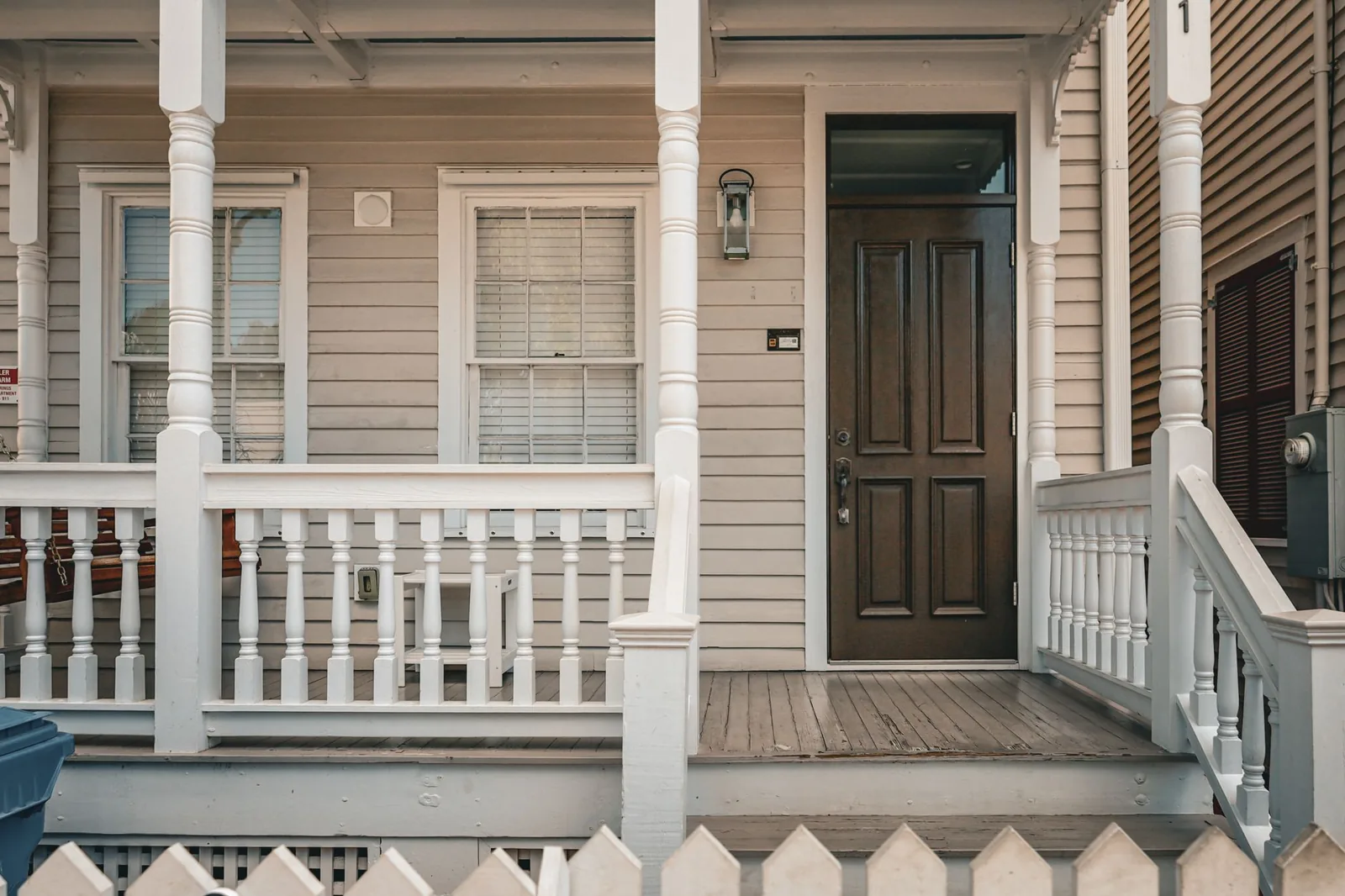
Photo by Arian Fernandez via Pexels
Furniture, Greenery, and Small Touches That Finish the Look
Once the structure is right, the finishing layer is cheap, fast, and completely reversible — which makes it the safest place to experiment.
A pair of rocking chairs or Adirondack chairs plus a small side table is the classic formula for a reason. It costs $200 to $600 for weather-resistant sets and instantly signals “lived-in.” On a smaller stoop, a single bench or two slimmer chairs against the wall keeps the walkway clear.
Plants do the heavy lifting on warmth. Two matching planters flanking the door — filled with boxwood, ferns, or seasonal color — frame the entry for under $100. A hanging basket or window box adds a vertical note. If your porch is shaded, hostas and ferns thrive with little care; in full sun, geraniums and petunias give color all summer.
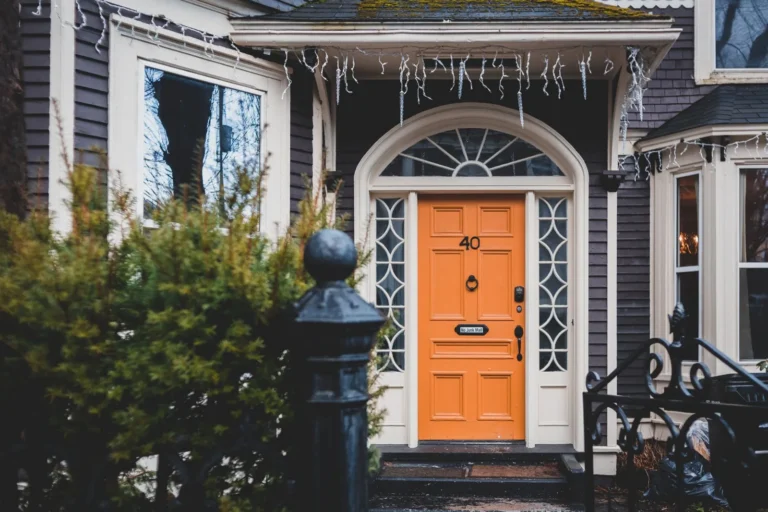
The door itself is the focal point, so tie it together deliberately. A new coat on the front door in a color that contrasts the siding — deep navy, forest green, or a warm red — runs $50 to $150 in materials and is one of the highest-impact changes you can make. Replace tired hardware, add a quality house-number plate and a mat, and the entry reads as intentional rather than assembled.
What a Front Porch Renovation Really Costs
Costs swing wildly depending on whether you are refreshing a porch that already exists or building structure from scratch. Here is a realistic breakdown of common scopes.
| Feature | Budget Refresh | Mid-Range Update | Full Rebuild |
|---|---|---|---|
| Flooring | Repaint/stain wood, $150–$400 | Composite decking, $3,000–$7,000 | New subframe + flooring, $8,000–$18,000 |
| Columns | Repaint existing, $50–$150 | Wrap posts in composite, $400–$1,200 | Replace with fiberglass, $1,000–$3,500 |
| Railings | Repair + paint, $200–$600 | New aluminum balusters, $1,500–$4,000 | Cable or custom rail, $3,000–$8,000 |
| Roof | Repaint trim, $100–$300 | Add fascia/soffit detail, $600–$1,500 | New gable/shed roof, $2,500–$8,000 |
| Lighting | Replace fixture, $80–$300 | Add sconces + LED strip, $400–$1,200 | Full layered system, $1,500–$4,000 |
| Furnishings | New mat + plants, $100–$300 | Chair set + planters, $400–$1,000 | Full outdoor living setup, $1,500–$5,000 |
A full rebuild of a modest 8-by-12-foot porch with a roof typically lands between $15,000 and $35,000. A cosmetic refresh of the same porch — paint, lighting, plants, furniture — can be done for under $2,000. Most homeowners get the biggest curb-appeal return in the middle: solid flooring, clean columns, layered lighting, and intentional furniture.
Frequently Asked Questions
What is the cheapest way to update a front porch?
Repaint the floor, door, and trim, then add two planters, a new mat, and better lighting. That combination usually runs under $500 and changes the entry more than any single expensive item.
Do I need a permit to build or enlarge a front porch?
Usually, yes. Most municipalities require a permit for new porch structure, roof changes, and any railing or stair work, and many enforce setback rules for anything extending toward the street. Check with your local building department before starting; unpermitted work can complicate a future sale.
How wide should a front porch be?
For usable seating, aim for at least 6 feet of depth, though 8 to 10 feet is far more comfortable for chairs plus walking space. Width should generally run a third to the full width of the house facade, depending on the style you are after.
Does a front porch add resale value?
It generally improves curb appeal, which influences buyer interest and offers, even if a porch does not always recoup 100% of construction cost on paper. Real estate professionals consistently rank an inviting entry among the top curb-appeal fixes for selling a home.
What is the most durable porch flooring?
Composite decking and stone or concrete pavers are the most durable options. Composite resists rot and insects with almost no upkeep, while stone and pavers handle heavy traffic and freeze-thaw cycles for decades.
The Bottom Line
The strongest front porch design ideas share one trait: they make the entry look intentional rather than leftover. Match the style and materials to your home’s architecture, choose flooring and lighting for your climate and habits, and let paint, plants, and furniture do the finishing work. You can spend $400 on a weekend refresh or $30,000 on a full rebuild — both move the needle, as long as the result reads as one coherent entry rather than a pile of parts.
Start with the structure you can afford, then layer in the details that make it feel like home. For more on the finishing touches, see our guides to front door color ideas, exterior lighting ideas for homes, and best curb appeal plants and bushes. For a deeper look at materials and construction standards, the pros at This Old House cover porch building and repair in detail, and Better Homes & Gardens keeps a running gallery of porch styles worth borrowing from.