Best Exterior Paint Brands Compared: Sherwin-Williams vs. Behr vs. Benjamin Moore
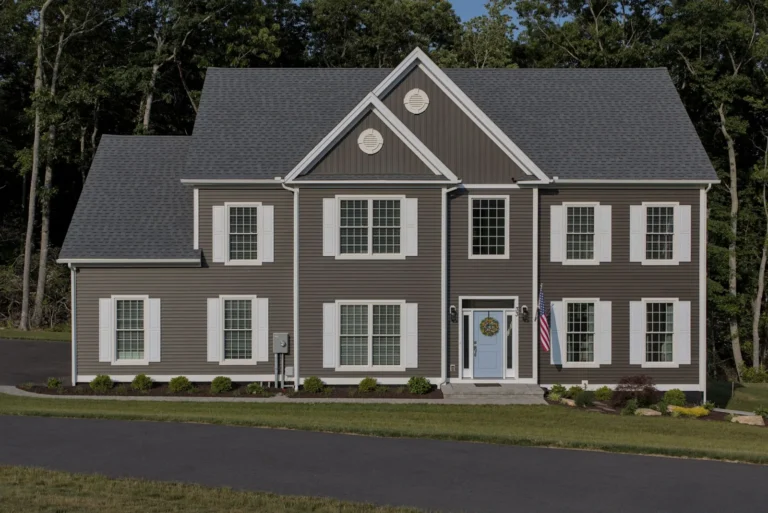
When you line up the best exterior paint brands compared side by side, the differences go well beyond the number on the price tag. Coverage per coat, fade resistance, adhesion to your siding, and how many seasons the finish survives all shift meaningfully from one label to the next — and those differences show up on your walls within a couple of years, not a decade.
A gallon of exterior paint runs anywhere from about $28 to $105. Paying more does not automatically buy a better paint job, and paying less does not always mean you are settling. The trick is matching the brand to your siding material, your climate, and how long you plan to stay in the house.
Below we break down Sherwin-Williams, Benjamin Moore, Behr, Valspar, and PPG on the details that actually matter: cost per gallon, real coverage, durability on common siding types, and where each brand quietly cuts corners. By the end, you will know exactly which paint is worth the money for your project.
How We Compared the Top Exterior Paint Brands
To rank these brands fairly, we looked at five factors that contractors and pro painters consistently weigh when they quote a job.
- Price per gallon. List price at the brand’s own store or a big-box retailer, since sales and contractor discounts can swing this by 20% or more.
- Coverage per coat. Manufacturers rate most premium lines at 350 to 400 square feet per gallon, but real-world coverage on rough or porous siding is often lower.
- Fade and chalk resistance. The best exterior paints hold their color longer and resist the chalky film that UV exposure leaves behind.
- Adhesion and flexibility. A topcoat has to grip wood, fiber cement, stucco, and vinyl while expanding and contracting with temperature swings.
- Availability and color selection. A great paint you cannot easily buy or tint is not much use mid-project.
Best Exterior Paint Brands Compared: The Top Contenders at a Glance
The short version: Sherwin-Williams and Benjamin Moore dominate the premium end, Behr wins on value, and Valspar and PPG sit in the middle as solid workhorses. Here is how the flagship lines stack up.
| Feature | Sherwin-Williams Emerald | Benjamin Moore Aura | Behr Marquee | Valspar Reserve |
|---|---|---|---|---|
| Price per gallon | $95–$105 | $90–$100 | $48–$55 | $50–$60 |
| Rated coverage | 350–400 sq ft | 350–400 sq ft | 350–400 sq ft | 300–350 sq ft |
| Warranty | Lifetime | Lifetime | Lifetime | Lifetime |
| Best for | Tough climates, color retention | Deep colors, fade resistance | One-coat coverage on a budget | Solid all-around at mid price |
Photo by Luke Miller via Pexels
Sherwin-Williams: The Premium Workhorse
Sherwin-Williams is the default choice for many painting contractors, and for a reason. Its Emerald Exterior line is a 100% acrylic formula that self-primes on most surfaces, covers well, and holds up in harsh sun and freeze-thaw cycles better than most competitors in the same price tier.
At $95 to $105 per gallon, Emerald is the most expensive paint in this group. In exchange you get excellent one-coat coverage over a sound existing finish, strong dirt resistance, and a lifetime warranty when you use it with a Sherwin-Williams primer. The step-down Duration Exterior line runs about $80 to $90 a gallon and is a common pick for fiber cement and wood siding.
Who should buy it
- Homeowners in hot, sunny, or coastal climates where fade resistance matters.
- Anyone painting a light color over a dark one, where coverage really matters.
- People who want to buy once and not think about repainting for 10-plus years.
The downside is availability and price. Sherwin-Williams sells through its own stores, so you cannot just grab it on a Home Depot run, and you will pay full retail unless you catch one of their frequent 30% to 40% off sales.
Benjamin Moore: The Fade-Resistant Favorite
Benjamin Moore’s Aura Exterior is the paint many designers and high-end painters reach for when color accuracy and long-term fade resistance are the priority. Its color-lock technology holds deep, saturated hues — think navy, forest green, and black — noticeably better than budget acrylics, which tend to wash out within a few years.
Aura costs $90 to $100 per gallon and is rated for 350 to 400 square feet of coverage. It is self-priming and applies evenly, though some painters find it a touch finicky in direct sun or high heat, where it can dry too fast and leave brush marks if you overwork it. The step-down Regal Select line is a solid value at roughly $70 a gallon.
Who should buy it
- Homeowners painting a bold or dark color that needs to stay true for years.
- Anyone matching an exact color, since Benjamin Moore’s 3,500-plus colors are easy to tint precisely.
- Historic homes where a smooth, even finish matters.
If you are painting a basic beige or white ranch house, you may not need Aura’s color-lock performance — a mid-tier line will get you 90% of the way for 40% less money.

Photo by Eva Bronzini via Pexels
Behr: The Best Value for DIYers
Behr, sold exclusively at Home Depot, is the value pick that holds its own against the premium brands. Its top line, Marquee, costs $48 to $55 a gallon and advertises true one-coat coverage on many colors — a claim that mostly holds up on smooth, prepped surfaces.
The real strengths of Behr are price and convenience. You can buy it, tint it, and start painting in a single trip, and its coverage per dollar is hard to beat. The Ultra and Premium Plus lines run $35 to $45 a gallon and are perfectly adequate for budget repaints on wood and stucco.
Where Behr falls short
Behr’s fade resistance and self-leveling are a step below Benjamin Moore Aura and Sherwin-Williams Emerald, particularly in high-UV climates. If you are painting a south-facing wall in Arizona or Florida, you may notice the color dulling a season or two earlier. For most temperate-climate homes, though, the difference is marginal and rarely worth double the price.
For more on how long any of these finishes should last on your walls, see our guide to how long exterior paint lasts.
Valspar and PPG: Solid Mid-Price Options
Valspar (Lowe’s) and PPG (Home Depot and independent dealers) round out the field as dependable mid-priced brands. Valspar’s Reserve line sits at $50 to $60 a gallon, while its lower-cost Signature and Duramax lines run $40 to $50. PPG’s Timeless and Manor Hall lines land in a similar range.
Neither brand wins any head-to-head performance tests against Emerald or Aura, but both are easy to apply, cover well, and come with lifetime warranties on their premium lines. They are sensible choices for a second coat over a like color, a shed or garage, or a rental property where you want decent quality without paying for top-tier chemistry.
How to Pick the Right Brand for Your Siding
The best brand for you depends less on brand loyalty and more on what is under the paint and what the weather will throw at it.
- Wood siding. Spend for a premium 100% acrylic like Emerald or Aura. Wood expands and contracts, and it is also the surface most likely to rot, so a flexible, breathable topcoat is worth the cost.
- Fiber cement. Mid-tier acrylics like Behr Marquee or Sherwin-Williams SuperPaint hold up well. This surface is stable, so you are mostly paying for fade resistance, not adhesion.
- Stucco. Choose a flat or satin 100% acrylic and budget more gallons than you expect — stucco drinks paint. Behr and Valspar are fine here.
- Vinyl siding. Pick a paint formulated for vinyl in a color no darker than the original, or you risk warping the panels. Most brands sell a vinyl-safe line.
Also factor in the total project cost, not just the price per gallon. A $50-a-gallon paint that needs three coats is more expensive in the end than a $90 paint that covers in two. Our breakdown of exterior paint cost per square foot walks through the full math, including labor and primer.
Frequently Asked Questions
What is the best exterior paint brand overall?
For most homeowners, Sherwin-Williams Emerald and Benjamin Moore Aura are the top performers for durability and fade resistance, while Behr Marquee is the best value. The right answer depends on your siding, climate, and budget, which is why the best exterior paint brands compared here are ranked by use case rather than a single winner.
Is Behr as good as Sherwin-Williams?
Not quite. Behr covers well and costs about half as much, but Sherwin-Williams Emerald generally holds its color and sheen longer in high-UV and coastal climates. For a temperate-climate repaint in a light color, Behr is a smart, cost-effective choice.
How much should I pay for exterior paint?
Budget $40 to $60 a gallon for a good mid-tier acrylic and $90 to $105 for a premium line. The cheapest paints under $35 a gallon rarely hold up past five to seven years on exposed walls.
Do I need a primer with premium paint?
Premium lines like Emerald and Aura are self-priming over a sound, clean existing finish. You still need a dedicated primer on bare wood, chalky surfaces, or when switching from oil to latex.
Which brand has the best color selection?
Benjamin Moore leads on color depth and tinting accuracy, with more than 3,500 colors. Sherwin-Williams and Behr both offer several thousand colors and reliable color-matching.
The Bottom Line
The best exterior paint brands compared here all produce good paint, but they are not interchangeable. If you are painting a home you plan to keep for a decade in a demanding climate, spend the money on Sherwin-Williams Emerald or Benjamin Moore Aura — the higher upfront cost is the cheapest way to buy an extra five years between repaints. If you are repainting a rental, a shed, or a temperate-climate home in a light color, Behr Marquee will deliver most of the performance for roughly half the price.
Whatever you choose, the brand matters far less than the prep. Clean the surface, scrape loose paint, caulk the gaps, and prime bare spots, and a $50 gallon will outperform a $105 gallon slapped onto a dirty wall every time. If you are still narrowing down a color to go with your new paint, start with our guide to the best exterior paint colors for 2026 and check the This Old House exterior paint buying guide for testing details and application tips.