Metal Siding for Modern Homes: Costs, Styles, and What to Know Before You Buy
Metal siding for modern homes has moved from barns and warehouses to the front of award-winning residential architecture. Flat profiles, crisp corners, and long, uninterrupted runs give a contemporary house the minimal look that wood and vinyl struggle to match. If you are building or renovating a modern home, metal is worth a serious look — but it is not a single product, and the choices you make on material, panel profile, and finish change both the look and the final bill.
This guide breaks down what metal siding actually costs, how steel and aluminum compare, which panel styles fit a modern facade, and what maintenance you are signing up for. By the end, you will know whether metal siding for modern homes is the right call for your project and roughly what you should expect to pay per square foot.
Why Metal Siding Works So Well on Modern Homes
Modern residential design leans on clean geometry, flat or low-pitched roofs, and honest materials. Metal fits that language almost perfectly. Where wood grain reads as rustic and vinyl reads as traditional, metal reads as architectural. Its panels can run floor to ceiling without visible seams breaking the plane of the wall, which is exactly the uninterrupted surface a contemporary elevation wants.
There are practical reasons the material has crossed over from commercial work, too. Metal siding for modern homes resists fire, insects, and rot in a way no wood product can. It holds paint far longer than cedar or fiber cement because the color is baked onto the coil before the panel is ever formed, rather than brushed on after installation. It is also one of the more recyclable claddings you can put on a house — most steel and aluminum panels contain a high share of recycled content and are fully recyclable again at end of life.
The trade-off is thermal performance and, in some climates, condensation. Metal itself has almost no insulation value, so a modern metal wall needs a continuous layer of rigid foam or insulated sheathing behind it to hit code and keep the interior comfortable. Done properly, that same layer quiets the rain noise that people often worry about when they hear the word “metal.”
Steel vs. Aluminum: Which Metal Is Right for Your House?
Most residential metal siding is either steel or aluminum, and the two are not interchangeable. Steel is the default for panel siding because it is strong, rigid, and cheaper per square foot. Aluminum is lighter and naturally corrosion-resistant, which makes it the safer pick near the coast. Here is how they stack up.
| Feature | Steel | Aluminum |
|---|---|---|
| Installed cost | $6–$16 per sq ft | $5–$12 per sq ft |
| Weight | Heavier; needs sound framing | Light; easier to handle and cut |
| Corrosion resistance | Needs galvanized or Galvalume coating | Naturally rust-resistant |
| Salt-air performance | Good with the right coating | Excellent in coastal zones |
| Dent resistance | Very good | Softer; dents and creases more easily |
| Thermal expansion | Low | High; installers must allow for movement |
| Recycled content | High | High |
For most inland homes, steel is the better value and the stiffer, flatter panel. If you live within a mile or two of salt water, aluminum sidesteps the edge-corrosion problems that can plague steel even when it is factory-coated. Either way, insist on a PVDF finish (sold under names like Kynar 500) rather than a basic polyester coating — the difference in fade resistance is dramatic, and it only adds a dollar or two per square foot.
Popular Metal Siding Styles and Profiles
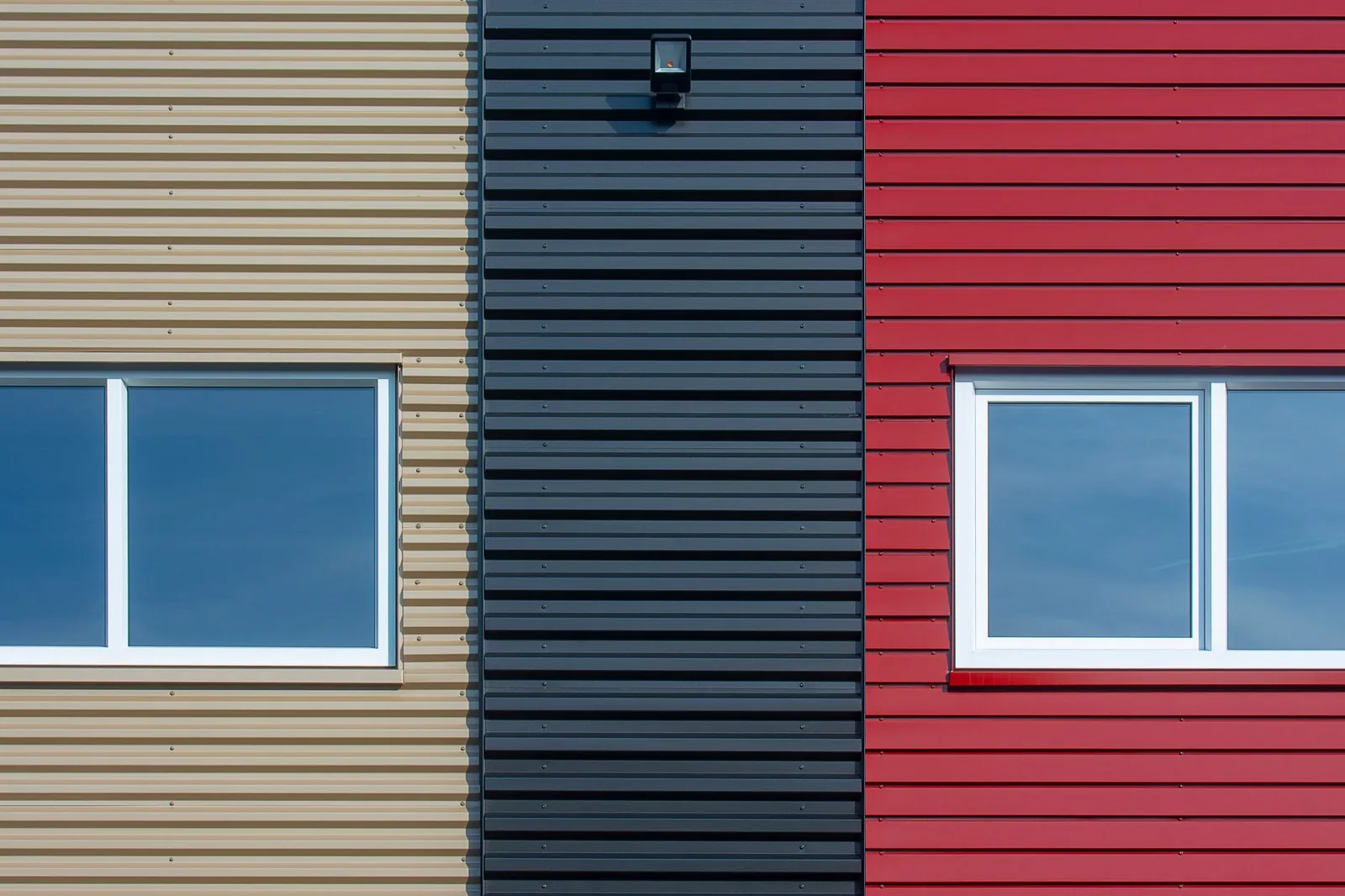
Metal siding for modern homes is not one profile. The panel you choose has more influence on the finished facade than the color does.
Corrugated and ribbed panels
The classic wavy or box-rib panel is the cheapest metal siding option and still one of the most striking on a modern home. Run vertically, it adds rhythm and shadow to an otherwise flat wall. Run horizontally, it reads more industrial. Expect to pay roughly $3 to $6 per square foot installed for exposed-fastener ribbed panels.
Standing seam
Standing seam uses hidden fasteners and raised vertical ribs, so there are no exposed screws on the face of the wall. It looks more refined than corrugated and holds up better because the fasteners never see weather. It is also the pricier route, typically $8 to $16 per square foot installed.
Flat and board-and-batten panels
For a genuinely flush, gallery-like wall, manufacturers sell flat architectural panels that install with a subtle reveal or a completely concealed system. A related look is vertical board-and-batten in metal, which mimics the wood siding trend but with none of the maintenance. Both sit in the middle-to-upper end of the cost range.
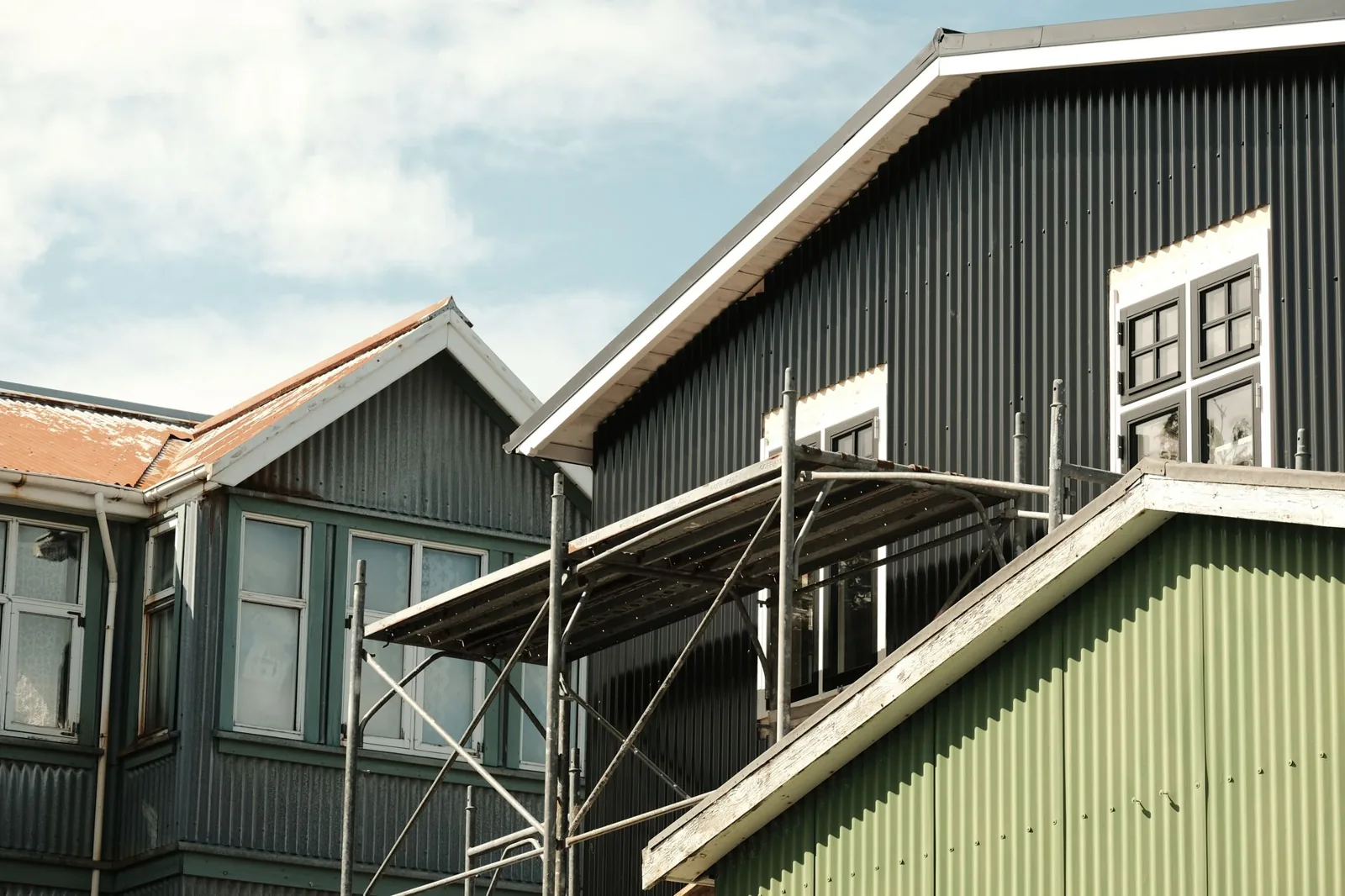
Photo by Jiri Ikonomidis via Pexels
What Metal Siding for Modern Homes Costs
The biggest variable in any metal siding quote is the panel system, not the metal itself. Materials for residential metal siding run about $3 to $8 per square foot, and full installation — including trim, fasteners, and the crew — lands between $6 and $16 per square foot depending on where you live and how complex the facade is.
Here is a realistic breakdown for a 2,000-square-foot wall area:
- Corrugated/ribbed panels: $6,000–$12,000 total
- Standing seam: $16,000–$32,000 total
- Flat architectural panels: $14,000–$30,000 total
- Aluminum panels (coastal): $10,000–$24,000 total
Compared with other claddings, metal is not the budget option. Vinyl runs $3 to $8 per square foot installed, and fiber cement around $6 to $12. Metal competes with premium fiber cement and stone veneer on price, but it beats both on longevity and maintenance. For a fuller side-by-side, see our breakdown of house siding cost per square foot and house siding options compared.
One detail worth knowing: complex modern facades with many window openings, reveals, and corners generate more trim and more labor per square foot than a simple box. The same panel can cost 20 to 30 percent more per square foot to install on an intricate elevation than on a plain gable wall.
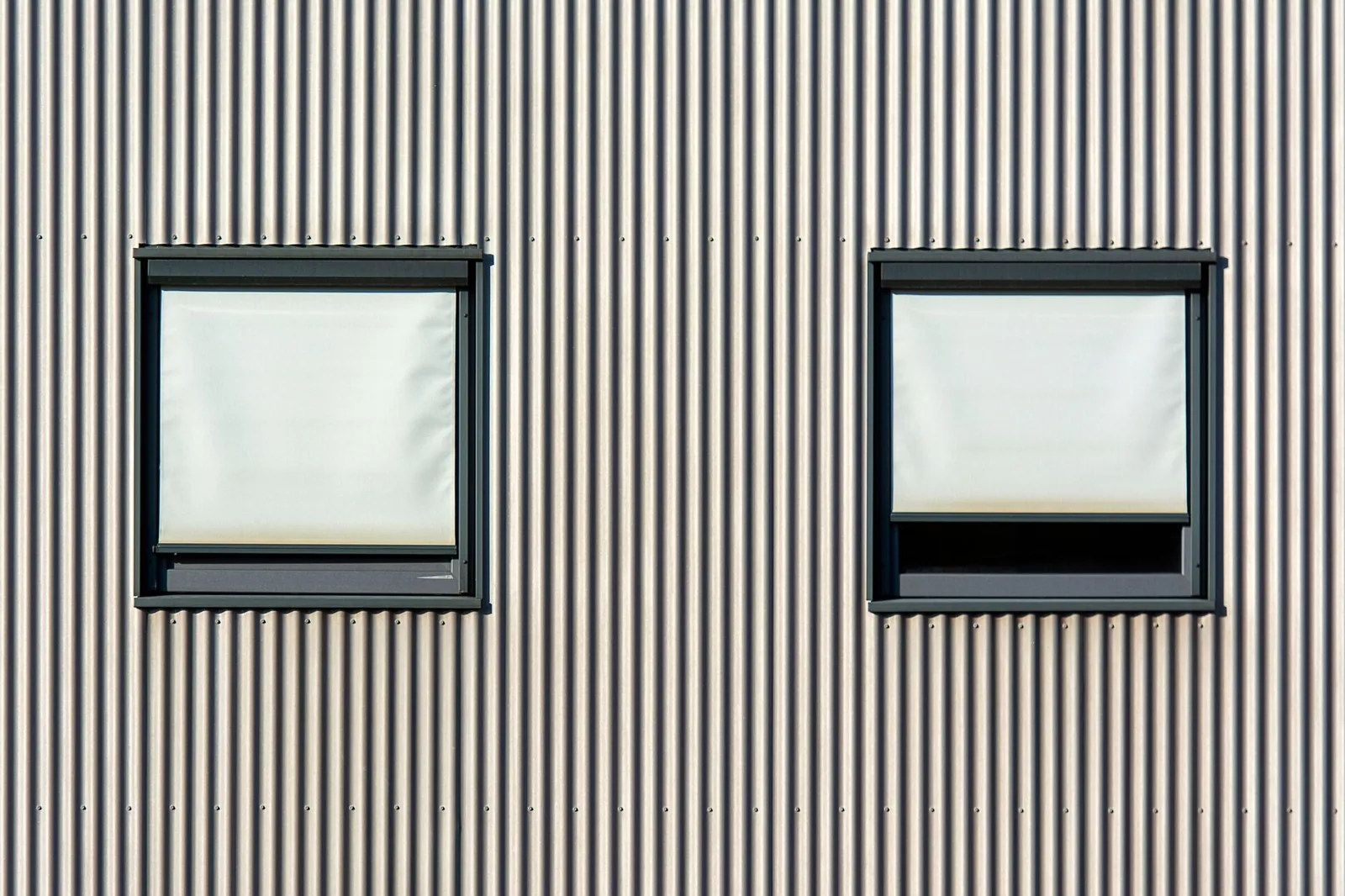
Photo by Jan van der Wolf via Pexels
Finishes, Colors, and Coating Systems
The finish is where metal siding for modern homes either earns its reputation or falls flat. The panel’s color and texture come from a factory-applied coil coating, and the chemistry of that coating decides how long the color stays true.
PVDF (Kynar 500 or Hylar 5000) coatings are the industry standard for anything you want to look new in 20 years. These fluoropolymer finishes resist fading, chalking, and UV breakdown far better than polyester, and they carry 30- to 40-year finish warranties from the major manufacturers. Polyester and silicone-modified polyester (SMP) coatings are cheaper but will fade and chalk noticeably within a decade, especially in dark colors on a south-facing wall.
Modern metal also comes in finishes that older generations of siding never offered. Wood-grain prints, matte blacks, and brushed metal textures let you get a warm or moody facade without any of the upkeep of real wood or the shine of traditional panels. Dark charcoal, graphite, and warm bronze are the colors most often specified on contemporary homes, often paired with cedar or stucco accents. If you are still deciding on a palette, our modern house facade ideas gallery has more combinations to borrow from.
Installation, Maintenance, and How Long It Lasts
Metal siding is best left to a crew that works with it regularly. The panels are unforgiving of sloppy layout — a reveal that is out of square by a quarter inch will read from the street — and the cutting, flashing, and trim details around windows differ from wood or fiber cement. Get at least three quotes and ask each contractor how many full metal-siding jobs they have completed in the last two years.
Maintenance is where the material pays you back. A rinse with a garden hose once or twice a year removes most grime, and a soft brush with mild detergent handles the rest. Avoid abrasive cleaners and, if you pressure wash, keep the wand well back and angled down so you do not drive water behind the panels. Touch up any deep scratch promptly to protect the underlying metal, especially on steel.
Realistically, a properly installed steel wall will last 40 to 70 years, and aluminum often exceeds 40 years, with the finish needing nothing more than cleaning for decades. That lifespan is the strongest financial argument for the material: you will likely replace vinyl twice and repaint wood several times before a metal facade needs real attention.
Frequently Asked Questions
Is metal siding good for modern homes?
Yes. Its flat profiles, long runs, and wide color range suit contemporary architecture better than most claddings, and it offers fire, rot, and insect resistance that wood cannot match. The main caveats are up-front cost and the need for proper insulation and detailing behind the panels.
How much does metal siding cost per square foot?
Installed metal siding for modern homes typically runs $6 to $16 per square foot. Corrugated panels sit at the low end around $3 to $6, while standing seam and flat architectural panels land at $8 to $16 per square foot.
Is steel or aluminum siding better?
For most inland homes, steel wins on stiffness, price, and dent resistance. Aluminum is the better choice within a mile or two of salt water because it does not corrode the way steel can. Both perform well when finished with a PVDF coating.
Does metal siding rust?
Steel will rust if the protective coating is scratched through or wears out, which is why a factory-applied galvanized or Galvalume base plus a PVDF topcoat matters. Aluminum does not rust at all, though it can oxidize and dull in harsh coastal environments.
How long does metal siding last?
Steel siding lasts 40 to 70 years with basic cleaning, and aluminum typically exceeds 40 years. The factory finish is the limiting factor, not the metal, and PVDF finishes routinely carry 30- to 40-year warranties.
The Bottom Line
Metal siding for modern homes is a premium cladding that earns its cost over a very long life. It delivers the clean, flat planes contemporary architecture depends on, shrugs off fire, insects, and rot, and asks almost nothing of you in maintenance. The price of entry — roughly $6 to $16 per square foot installed — is higher than vinyl and comparable to top-tier fiber cement, but the material will likely be the last siding that wall ever needs.
Before you commit, nail down three things: steel versus aluminum for your climate, a panel profile that matches your design intent, and a PVDF finish rather than a budget polyester coating. Get quotes from crews that specialize in metal, and confirm the insulation and moisture-detail plan behind the panels. For more on how metal stacks up against other claddings, start with our guide to house siding options compared, then check the house siding cost per square foot breakdown to build your budget. And for a deeper look at the durability trade-offs between materials, This Old House and Bob Vila both keep current guides worth reading before you sign a contract.