Wood Siding Pros and Cons: Costs, Upkeep, and Lifespan
The wood siding pros and cons debate comes down to one honest trade-off: nothing matches real wood for curb appeal and resale value, but nothing asks more of you in time and money, either. If you’re deciding between cedar shingles, redwood planks, or a manufactured alternative like fiber cement, you need straight numbers before you sign a contract.
Wood siding has dressed American homes since the colonial era, and it’s still the gold standard for character. A well-kept cedar or redwood exterior can run 40 to 60 years, while vinyl often looks tired at 20 to 25. But that longevity has a price tag attached to it, and it isn’t only the upfront install.
Here’s the full rundown of the wood siding pros and cons — costs, maintenance hours, species differences, and the situations where wood is clearly worth it or clearly not.
The Case for Wood: What Makes It Worth the Money
Wood is the only siding material that improves with age when it’s cared for. Here’s what you’re paying for.
Curb Appeal That Manufactured Options Can’t Fake
Real wood has depth, grain variation, and warmth that stamped vinyl and painted fiber cement can only imitate. From the curb, a cedar shake or board-and-batten wall reads as custom and high-end in a way factory siding rarely does. Realtors consistently rank wood exteriors among the top features buyers notice first, and it’s one of the few exterior upgrades that can recover close to its cost at resale.
A Long Service Life — With a Caveat
Species matters more than the word “wood” itself:
- Cedar: 25 to 40 years typical, sometimes longer with stain reapplication every 4 to 6 years.
- Redwood: 40 to 60 years in dry climates; it resists rot and insects naturally.
- Pine and fir: 20 to 30 years, and only if you stay on top of paint and sealing.
- Engineered wood (LP SmartSide, etc.): 30 to 50 years with far less hands-on work.
That “with a caveat” is the whole story. Real wood only hits those upper figures if it’s installed with proper flashing, sealed at every cut, and re-stained on schedule.
Natural Insulation and Lower Carbon Footprint
Wood is a naturally better insulator than vinyl or metal, adding a modest R-value of about 0.8 to 1.0 per inch. More importantly for many homeowners, wood is a renewable material that stores carbon rather than emitting it during manufacture. If environmental impact is part of your decision, wood siding beats PVC and cement-based products on embodied energy almost every time.
Repairable Board by Board
When a vinyl panel cracks or a fiber cement board chips, you often replace a large section. With wood, a rotted or split board comes out individually and a new one goes in — a $20 to $80 fix versus hundreds for a panel job. For an older home where partial repairs are inevitable, that flexibility is a real financial advantage.
The Case Against Wood: The Costs and Labor Nobody Mentions
The wood siding pros and cons list tips hard toward maintenance on the downside. Be clear-eyed about these before you fall in love with the look.
The Upfront Price Is Higher Than You Think
Installed wood siding typically runs $8 to $15 per square foot, with premium cedar and redwood climbing to $18 or more. Compare that to vinyl at $3 to $7 and fiber cement at $5 to $12 per square foot. On a 2,000-square-foot exterior, wood can cost $10,000 to $20,000 more than vinyl up front — before you spend a dollar on upkeep.
Maintenance Is a Multi-Hour, Multi-Year Commitment
Wood demands a schedule, not a one-time treatment:
- Stain or paint every 3 to 7 years, depending on climate and exposure.
- Pressure-wash and re-caulk seams every 2 to 3 years.
- Inspect for rot, insect damage, and splitting around windows and the bottom edge annually.
- Expect to spend $1,500 to $4,000 on a professional re-stain of an average home each cycle.
Skip these and the lifespan promises vanish. Neglected wood siding rots from the bottom up, and rot spreads fast once water gets behind the boards.
Water, Insects, and Fire Are Real Threats
Wood is the only common siding material that termites, carpenter ants, and woodpeckers actively eat or drill. It also wicks moisture, so poor drainage or a missing drip edge leads to warping, cupping, and rot within a few seasons. And while treated and naturally dense woods resist ignition better than soft pine, wood siding is still the most flammable mainstream option — a consideration if you live in a wildfire zone.
Color Fades and Requires Re-Coating
Unlike vinyl, whose color runs through the panel, wood siding color sits on the surface as paint or stain. That finish fades, peels, and chalks in UV light, which is exactly why the re-coating schedule exists. If you want a low-effort exterior you can install and forget, wood is the wrong material.
Photo by Francesco Ungaro via Pexels
Wood Siding vs. the Popular Alternatives
To put the wood siding pros and cons in perspective, here’s how it stacks up against the two materials homeowners most often weigh it against.
| Feature | Wood Siding | Vinyl Siding | Fiber Cement |
|---|---|---|---|
| Installed cost / sq ft | $8–$18 | $3–$7 | $5–$12 |
| Lifespan | 25–60 years | 20–40 years | 30–50 years |
| Maintenance | Stain/paint every 3–7 yrs | Wash occasionally | Repaint every 10–15 yrs |
| Curb appeal | Excellent | Good | Very good |
| Rot / insect risk | High | None | Low (moisture at edges) |
| Repair cost | Low per board | Moderate per panel | Moderate per board |
| Fire resistance | Low to moderate | Moderate | Excellent |
The pattern is clear: wood wins on looks and longevity, loses on upkeep and upfront cost, and sits in the middle on fire safety. Fiber cement closes most of the gap on looks while slashing maintenance, which is why it has eaten into wood’s market share over the past two decades. For a deeper look at that matchup, see our house siding options compared guide.
Which Wood Species Should You Choose?
Not all wood siding behaves the same. Your choice of species drives both the price and how much maintenance you’re signing up for.
Cedar and Redwood: The Rot-Resistant Standard
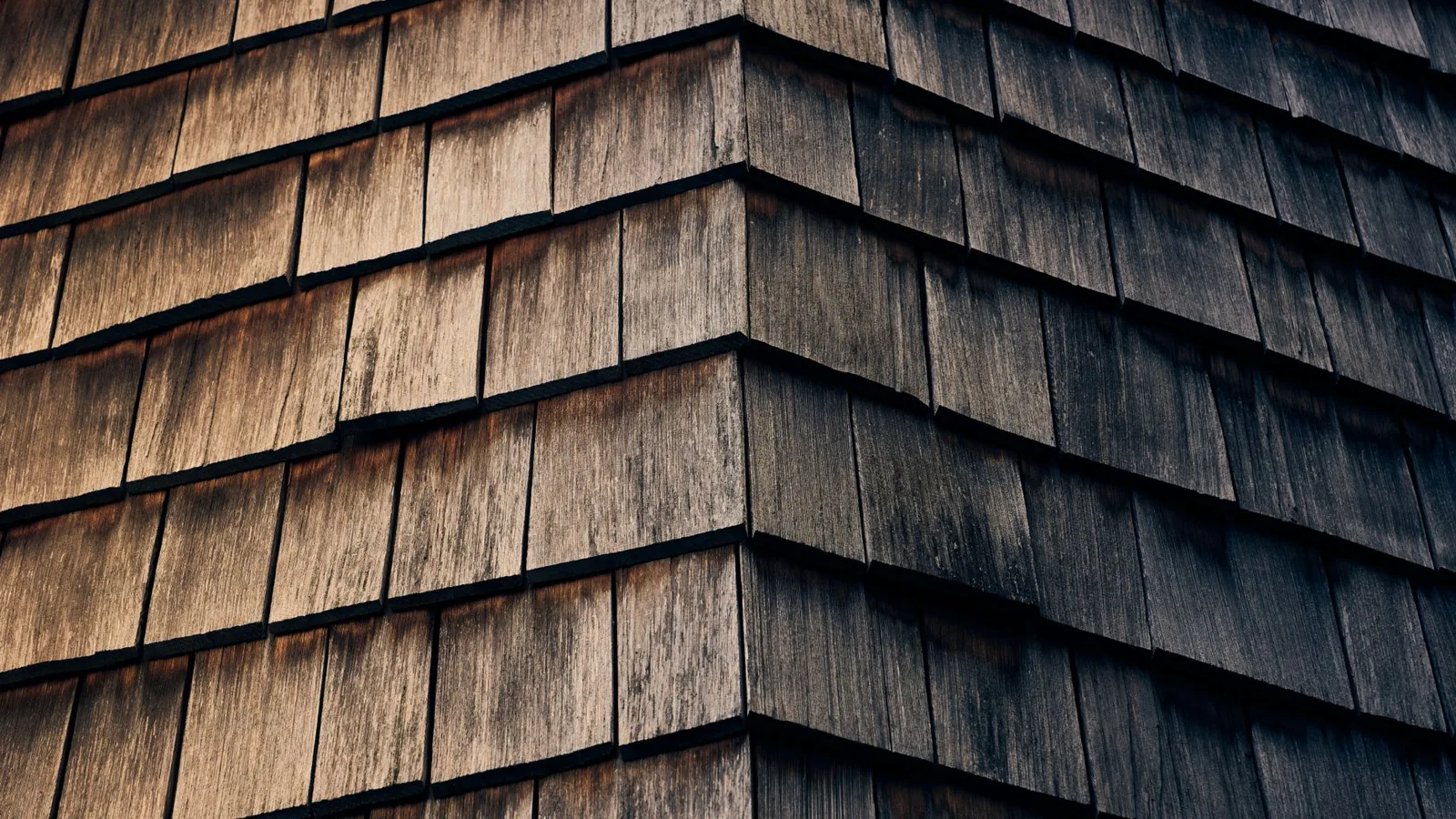
Western red cedar and redwood contain natural oils and tannins that repel insects and resist decay, which is why they’re the default for premium siding. Cedar shingles and shakes are light, stable, and take stain beautifully. Redwood is denser and pricier but lasts longer in dry climates. Both can be left to weather to a silver-gray if you prefer a rustic look — but that weathered finish is a choice, not “maintenance-free.”
Pine, Fir, and Spruce: Budget Wood With Strings
Softwoods like pine and fir cost a fraction of cedar — often $4 to $8 per square foot installed — but they rot quickly without a continuous paint film and are highly vulnerable to termites and woodpeckers. They’re a reasonable pick for painted board-and-batten in dry regions and a poor one in humid or wet climates.
Engineered Wood: The Compromise
Products like LP SmartSide and engineered cedar shingles are made from wood strands bound with resin and wax. They offer most of wood’s look at roughly half the maintenance, with 30- to 50-year warranties. The catch is that edges and cut ends still need sealing, and once the outer resin layer is breached, they can swell. Engineered wood sits neatly between real wood and fiber cement on both price and upkeep.
Photo by Erik Mclean via Pexels
What Wood Siding Actually Costs to Own Over 30 Years
Upfront price tells only half the story. Over a 30-year ownership period on an average 2,000-square-foot exterior, here’s how the numbers tend to work out:
- Install: $16,000 to $36,000 for cedar or redwood, installed.
- Re-staining: $1,500 to $4,000 per cycle, roughly every 5 years — so 5 to 6 cycles, or $7,500 to $24,000 total.
- Spot repairs: $200 to $600 per decade for occasional board replacement and caulking.
- All-in 30-year cost: roughly $25,000 to $60,000.
That’s the figure to weigh against vinyl’s all-in 30-year cost, which often lands under $15,000. Wood siding is a premium product with a premium ownership bill — and for many buyers, the look is worth it. If you’re budgeting, our house siding cost per square foot breakdown walks through the material-by-material numbers.
When Wood Siding Is the Right Call — and When It Isn’t
The wood siding pros and cons resolve differently depending on your home, climate, and plans.
Choose wood siding if:
- You own a period home or a high-end property where authenticity drives value.
- You live in a dry climate where rot pressure is low.
- You’re willing to schedule (and budget for) re-staining every few years.
- You plan to stay long enough to enjoy the payoff.
Skip wood siding if:
- You’re in a humid, rainy, or termite-heavy region and can’t commit to upkeep.
- You want a truly low-maintenance exterior.
- You’re on a tight budget, since vinyl siding costs a fraction up front.
- You live in a wildfire-prone area and fire resistance is a deciding factor.
Frequently Asked Questions
How long does wood siding last?
Cedar typically lasts 25 to 40 years, redwood 40 to 60, and pine 20 to 30 — but only with regular staining and sealing. Neglected wood siding can begin rotting within a decade, especially near the ground line.
How much does wood siding cost per square foot?
Installed wood siding runs $8 to $15 per square foot on average, with premium cedar and redwood reaching $18 or more. Budget softwoods like pine can be installed for as little as $4 to $8 per square foot.
Does wood siding increase home value?
Yes, in most markets. Real wood ranks among the top exterior features for curb appeal, and a well-maintained wood exterior can recover a large share of its cost at resale — far more than basic vinyl.
What is the biggest downside of wood siding?
Maintenance. Wood requires re-staining or repainting every 3 to 7 years plus annual inspections for rot and insects, which adds thousands of dollars over the life of the home compared with vinyl or fiber cement.
Is wood siding fire resistant?
Not especially. Dense, naturally rot-resistant woods like cedar and redwood resist ignition better than soft pine, but wood is still the most flammable mainstream siding option and is a poor choice in wildfire zones.
The Bottom Line
Wood siding is the best-looking, longest-lasting option for homeowners who will actually maintain it — and a slow-motion money pit for those who won’t. The honest wood siding pros and cons summary is this: you trade a higher upfront price and a lifetime of scheduled upkeep for curb appeal, resale value, and board-by-board repairability that no manufactured panel can match.
If you’re drawn to the warmth of wood but flinching at the maintenance, engineered wood or fiber cement delivers most of the look with far less labor. Whichever direction you go, get three written quotes, confirm the species and stain schedule up front, and budget for the upkeep before you buy. For an independent look at the different siding materials and their real-world lifespans, The Old House keeps an up-to-date comparison. The right siding decision is the one you can afford to keep beautiful — not just the one you can afford to install.